
Oasis - All Around The World Ukulele Chords
Before you play, tune your ukulele and use the tools below to set up your view and flow.
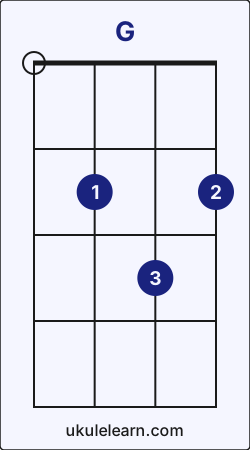 Ukulele G chord diagram
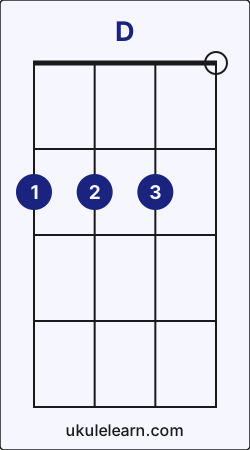 Ukulele D chord diagram
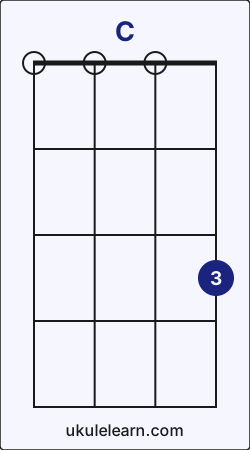 Ukulele C chord diagram
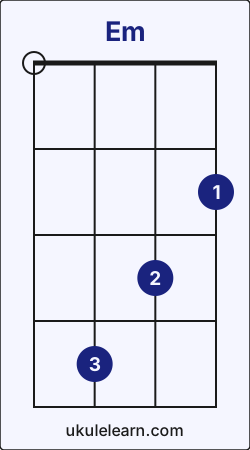 Ukulele Em chord diagram
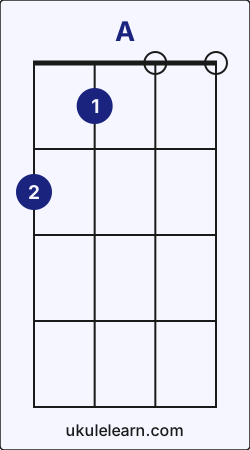 Ukulele A chord diagram
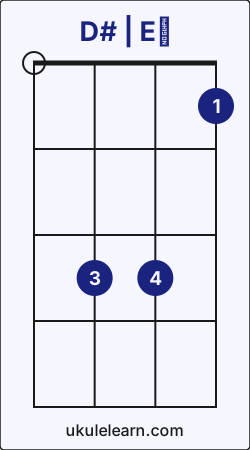 Ukulele D# | E♭ chord diagram
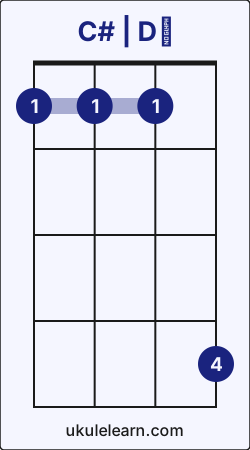 Ukulele C# | D♭ chord diagram
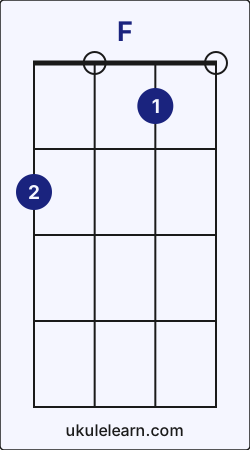 Ukulele F chord diagram
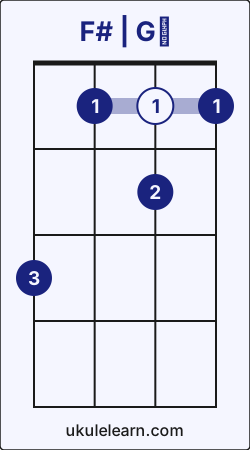 Ukulele F# | G♭ chord diagram
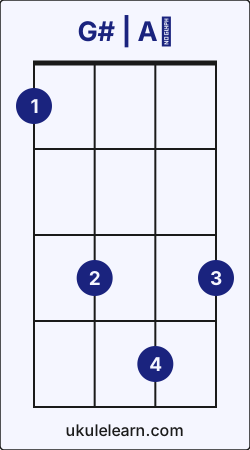 Ukulele G# | A♭ chord diagram
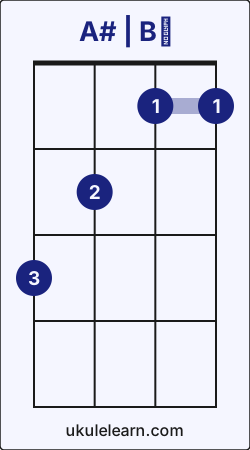 Ukulele A# | B♭ chord diagram
[Opening]
[G] [D] [C] [Em] [D] [G] [D] [C] [Em] [D]
[G]It’s a bit early in the midnight hour for [D]me
To [C]go through all the things I wanna [Em]be [D]
[G]I don’t believe in everything I [D]see
You [C]know I’m blind so why do you dis[Em]agree? [D]
[chorus]
[A]Take me away, ’cause I [C]just don’t wanna stay
And the [Em]lies you make me say, are getting [D]deeper every day
[D#]These are crazy days but they [G]make me shine, [C]time keeps rolling by [D] [C#] [C]
[chorus]
All Around The World, [G]you gotta spread the word [A]
Tell ’em what you heard, [C]were gonna make a better day [G]
All Around The World, you gotta spread the word [A]
Tell ’em what you heard, [C]you knows its gonna be okay [G] [F] [Gb]
[section 2]
[G]What you gonna do when the walls come falling [D]down?
You [C]never move you never make a [Em]sound [D]
[G]So where you gonna swim with the riches that you [D]found?
If you’re [C]lost at sea well I hope that you’ve [Em]drown [D]
[chorus]
[A]Take me away, ’cause I [C]just don’t wanna stay
And the [Em]lies you make me say, are getting [D]deeper every day
[D#]These are crazy days but they [G]make me shine, [C]time keeps rolling by [D] [C#] [C]
[chorus]
All Around The World, [G#]you gotta spread the word [A#]
[A#]Tell ’em [A#]what you [C#]heard, were gonna make a better day [G#]
All Around The World, you gotta spread the word [A#]
[A#]Tell ’em [A#]what you [C#]heard, you knows its gonna be okay [G#]
‘Cause all around the world [G#] [G] [Gb] [F] [D#]
[section 3]
It’s gonna be okay, [F] [D#]it’s gonna be okay [F] [D#]
It’s gonna be okay, [F] [D#]it’s gonna be okay [F] [D#]
[chorus]
All Around The World, [A#]you gotta spread the word [C]
Tell ’em what you heard, [D#]were gonna make a better day [A#]
All Around The World, you gotta spread the word [C]
Tell ’em what you heard, [D#]you knows its gonna be okay [A#]
It’s all around the world [A#]
[Closing]
And I know [A#]what I know, what I [C]know what I know
Yeah! I [D#]know what I know, it’s gonna be [A#]OK
And I [D#]know what I know, [A#]please don’t cry, never say die [A#] [D#]
So [A#]please don’t cry, never say die [A#] [D#]
How to play All Around The World on Ukulele (Step-by-step)
Oasis - All Around The World on ukulele requires 11 chords and 24 core chord transitions. You can find the full step-by-step guide below. Before you start, tune your instrument. The song uses the ↓-↓↑-↑↓↑ pattern; practice it muted first, or simplify to downstrokes while you learn the changes.
All Around The World uses these transitions most often: C → Em (8), Em → D (8), and D → C (6). These transitions may feel a little challenging at first, but with steady practice you can play this song quickly.When you are ready, begin with G - D chord transition.
1. G → D chord transition
To move from G to D;
- Lift your index finger from C string fret 2 and place it on G string fret 2.
- Slide your middle finger from A string fret 2 to C string fret 2.
- Slide your ring finger on E string from fret 3 to fret 2.
2. D → C chord transition
To move from D to C;
- While playing D, first lift your index finger and middle finger.
- Lift your ring finger from E string fret 2 and place it on A string fret 3.
3. C → Em chord transition
To move from C to Em;
- Lift your ring finger from A string fret 3 and place it on C string fret 4.
- Place index finger on A string fret 2.
- Place middle finger on E string fret 3.
4. Em → D chord transition
To move from Em to D;
- Lift your index finger from A string fret 2 and place it on G string fret 2.
- Slide your middle finger from E string fret 3 to C string fret 2.
- Lift your ring finger from C string fret 4 and place it on E string fret 2.
5. D → A chord transition
To move from D to A;
- While playing D, lift your ring finger from E string fret 2.
- Lift your index finger from G string fret 2 and place it on C string fret 1.
- Slide your middle finger from C string fret 2 to G string fret 2.
6. A → C chord transition
To move from A to C;
- While playing A, first lift your index finger and middle finger.
- Place ring finger on A string fret 3.
7. D → D# chord transition
To move from D to D#;
- While playing D, lift your middle finger from C string fret 2.
- Lift your index finger from G string fret 2 and place it on A string fret 1.
- Slide your ring finger from E string fret 2 to C string fret 3.
- Place pinky on E string fret 3.
8. D# → G chord transition
To move from D# to G;
- While playing D#, lift your pinky from E string fret 3.
- Lift your index finger from A string fret 1 and place it on C string fret 2.
- Slide your ring finger from C string fret 3 to E string fret 3.
- Place middle finger on A string fret 2.
9. G → C chord transition
To move from G to C;
- While playing G, first lift your index finger and middle finger.
- Lift your ring finger from E string fret 3 and place it on A string fret 3.
10. D → C# chord transition
To move from D to C#;
- While playing D, first lift your middle finger and ring finger.
- Slide your index finger on G string from fret 2 to fret 1.
- Place pinky on A string fret 4.
11. C# → C chord transition
To move from C# to C;
- While playing C#, first lift your index finger and pinky.
- Place ring finger on A string fret 3.
12. G → A chord transition
To move from G to A;
- While playing G, lift your ring finger from E string fret 3.
- Slide your index finger on C string from fret 2 to fret 1.
- Slide your middle finger from A string fret 2 to G string fret 2.
13. G → F chord transition
To move from G to F;
- While playing G, lift your ring finger from E string fret 3.
- Lift your index finger from C string fret 2 and place it on E string fret 1.
- Slide your middle finger from A string fret 2 to G string fret 2.
14. F → Gb chord transition
To move from F to Gb;
- Lift your index finger from E string fret 1 and place it on C string fret 1.
- Slide your middle finger from G string fret 2 to E string fret 2.
- Place ring finger on G string fret 3.
15. Gb → G chord transition
To move from Gb to G;
- Slide your index finger on C string from fret 1 to fret 2.
- Slide your middle finger from E string fret 2 to A string fret 2.
- Lift your ring finger from G string fret 3 and place it on E string fret 3.
16. C → G# chord transition
To move from C to G#;
- Keep ring finger on A string fret 3.
- Place index finger on G string fret 1.
- Place middle finger on C string fret 3.
- Place pinky on E string fret 4.
17. G# → A# chord transition
To move from G# to A#;
- While playing G#, lift your pinky from E string fret 4.
- Lift your index finger from G string fret 1 and place it on E string fret 1.
- Slide your middle finger on C string from fret 3 to fret 2.
- Lift your ring finger from A string fret 3 and place it on G string fret 3.
18. A# → C# chord transition
To move from A# to C#;
- While playing A#, first lift your middle finger and ring finger.
- Lift your index finger from E string fret 1 and place it on G string fret 1.
- Place pinky on A string fret 4.
19. C# → G# chord transition
To move from C# to G#;
- Keep index finger on G string fret 1.
- Lift your pinky from A string fret 4 and place it on E string fret 4.
- Place middle finger on C string fret 3.
- Place ring finger on A string fret 3.
20. G# → G chord transition
To move from G# to G;
- While playing G#, lift your pinky from E string fret 4.
- Lift your index finger from G string fret 1 and place it on C string fret 2.
- Slide your middle finger from C string fret 3 to A string fret 2.
- Lift your ring finger from A string fret 3 and place it on E string fret 3.
21. F → D# chord transition
To move from F to D#;
- While playing F, lift your middle finger from G string fret 2.
- Lift your index finger from E string fret 1 and place it on A string fret 1.
- Place ring finger on C string fret 3.
- Place pinky on E string fret 3.
22. D# → A# chord transition
To move from D# to A#;
- While playing D#, lift your pinky from E string fret 3.
- Lift your index finger from A string fret 1 and place it on E string fret 1.
- Slide your ring finger from C string fret 3 to G string fret 3.
- Place middle finger on C string fret 2.
23. A# → C chord transition
To move from A# to C;
- While playing A#, first lift your index finger and middle finger.
- Lift your ring finger from G string fret 3 and place it on A string fret 3.
24. C → D# chord transition
To move from C to D#;
- Lift your ring finger from A string fret 3 and place it on C string fret 3.
- Place index finger on A string fret 1.
- Place pinky on E string fret 3.
All Around The World chord transition analysis
A short, data-driven summary of the chord flow in All Around The World.
- All Around The World includes 92 chord transitions, 24 of them unique.
- These transitions represent 0.02% of all chord transitions in Ukulelearn.
- All Around The World contains 7 of the top 10 transitions across Ukulelearn.
- These transition patterns show how All Around The World connects to the rest of Ukulelearn. Mastering them helps you move to similar songs faster.After C, the most likely next chords across Ukulelearn are G (35%), F (16%), and D (11%).
- C → G: 35%
- C → D: 11%
After D, the most likely next chords across Ukulelearn are G (29%), A (17%), and Em (17%).- D → G: 29%
- D → A: 17%