
Flanders and Swann - The Gnu Song Ukulele Chords
Before you play, tune your ukulele and use the tools below to set up your view and flow.
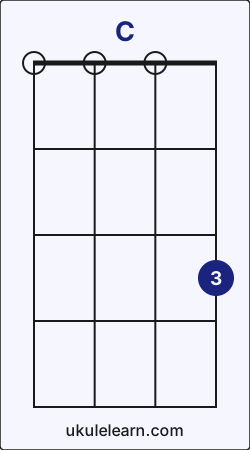 Ukulele C chord diagram
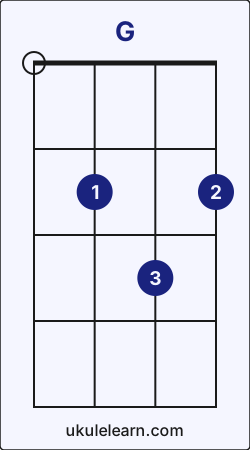 Ukulele G chord diagram
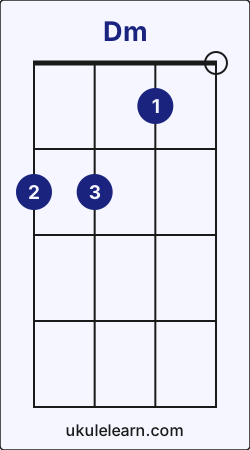 Ukulele Dm chord diagram
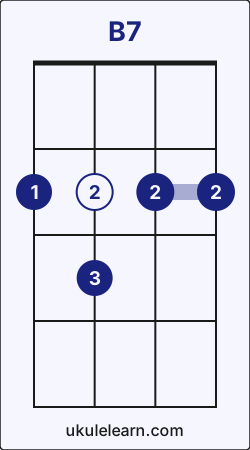 Ukulele B7 chord diagram
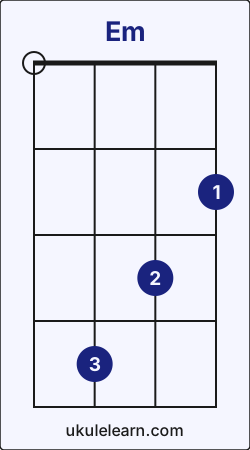 Ukulele Em chord diagram
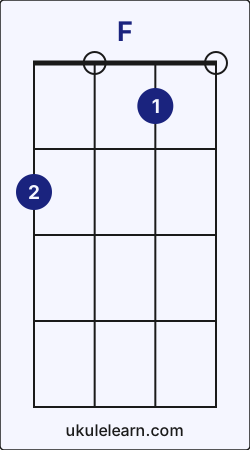 Ukulele F chord diagram
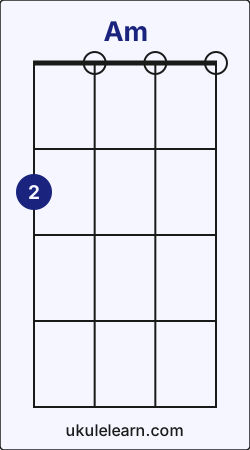 Ukulele Am chord diagram
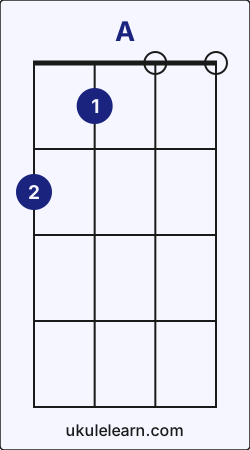 Ukulele A chord diagram
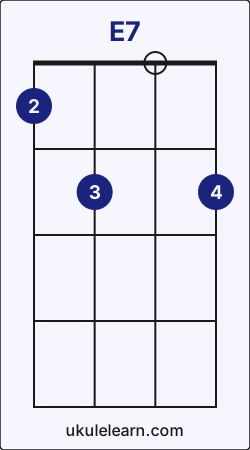 Ukulele E7 chord diagram
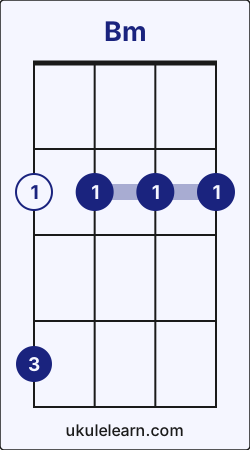 Ukulele Bm chord diagram
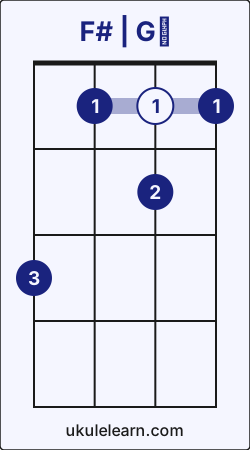 Ukulele F# | G♭ chord diagram
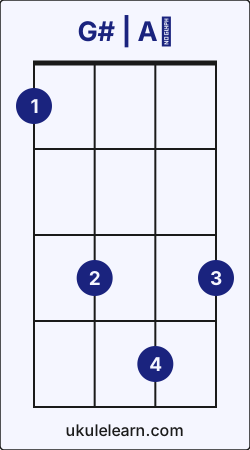 Ukulele G# | A♭ chord diagram
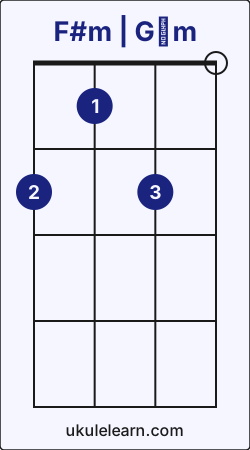 Ukulele F#m | G♭m chord diagram
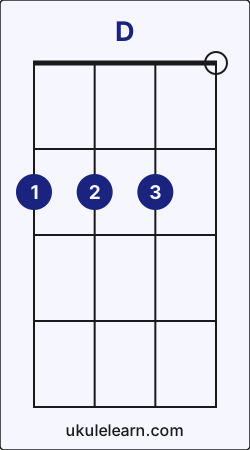 Ukulele D chord diagram
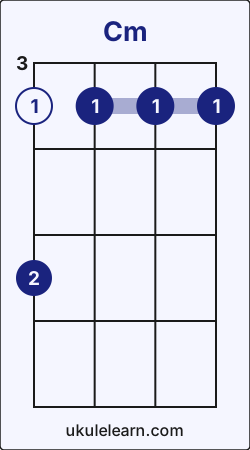 Ukulele Cm chord diagram
[Opening]
[C]A year ago, last Thursday, I was [G]strolling in the zoo
when I [Dm]met a man who [G]though he knew the [C]lot.
He was [B7]laying down the [Em]law about the habits of [B7]baboons
And the number of [Dm]quills a porcupine has [G]got.
[section 2]
So I asked him:
“[C]What’s that creature [G]there?”
He [Dm]answered, “Oh, it’s a [F]h’Elk”
I [Em]might of gone on [Am]thinking that was [Dm]true
If the animal in question hadn’t [A]put that chap to [Am]shame
And re[Em]marked, “[F]I h’aint a h’Elk, I’m a G[E7]nu”
[A]“I’m a Gnu, I’m a Gnu
The gnicest work of gnature in the [Bm]zoo
I’m a Gnu, [F#]how do you [Bm]do
You [F#]really ought to know who’s w[Bm]ho’s
[A]I’m a Gnu, spelt GNU
I’m g[E7]not a Camel [A]or a Kangaroo
[G]So [Bm]let me intro[Ab]duce
I’m g[G]neither man or [F#m]moose
Oh g[B7]no g[Em]no gno I’m a G[A]nu”
[interlude]
[D] [G] [D] [Em] [F] [A] [G]
[section 3]
[C]Well,
I had taken furnished [Cm]lodgings down at [G]RustingtononSea
[A]Whence I travelled [Am]on to Ashtonunder[Bm]Lyne
And the [B7]second night I [Em]stayed there I was [B7]woken from a dream
That I’ll [Dm]tell you all about some other [G]time
Among the hunting [C]trophies on the wall above my [G]bed
[C]Stuffed and [F]mounted, was a [Em]face I thought I [Dm]knew;
A Bison? No, it’s not a Bison.
An Okapi? Unlikely, Could it [A]be a [Am]Hartebeest?
When I though I heard a voice…
[Closing]
[A]“I’m a Gnu, I’m a Gnu, a gnother gnu
I wish I could gnash my teeth at [Bm]you
I’m a Gnu, [F#]how do you [Bm]do
You [F#]really ought to know who’s w[Bm]ho’s
[A]I’m a Gnu, spelt GNU
Call me [E7]Bison or Okapi and I’ll [A]sue
G[B7]nor am I the least like that [Am]dreadful Hartebeest,
Oh g[B7]no g[Em]no gno I’m a G[A]nu
g[B7]no g[Em]no gno I’m a G[A]nu
g[B7]no g[Em]no gno I’m a G[A]nu”
How to play The Gnu Song on Ukulele (Step-by-step)
Flanders and Swann - The Gnu Song on ukulele requires 15 chords and 34 core chord transitions. You can find the full step-by-step guide below. Before you start, tune your instrument. The song uses the ↓-↓↑-↓↑-↓↑ pattern; practice it muted first, or simplify to downstrokes while you learn the changes.
The Gnu Song uses these transitions most often: B7 → Em (6), G → C (5), and Bm → F# (4). These transitions may feel a little challenging at first, but with steady practice you can play this song quickly.When you are ready, begin with C - G chord transition.
1. C → G chord transition
To move from C to G;
- Lift your ring finger from A string fret 3 and place it on E string fret 3.
- Place index finger on C string fret 2.
- Place middle finger on A string fret 2.
2. G → Dm chord transition
To move from G to Dm;
- Lift your index finger from C string fret 2 and place it on E string fret 1.
- Slide your middle finger from A string fret 2 to G string fret 2.
- Lift your ring finger from E string fret 3 and place it on C string fret 2.
3. C → B7 chord transition
To move from C to B7;
- While playing C, lift your ring finger from A string fret 3.
- Place index finger on G string fret 2.
- Place middle finger on C string fret 3.
4. B7 → Em chord transition
To move from B7 to Em;
- Lift your index finger from G string fret 2 and place it on A string fret 2.
- Slide your middle finger from C string fret 3 to E string fret 3.
- Place ring finger on C string fret 4.
5. B7 → Dm chord transition
To move from B7 to Dm;
- Lift your index finger from G string fret 2 and place it on E string fret 1.
- Slide your middle finger from C string fret 3 to G string fret 2.
- Place ring finger on C string fret 2.
6. Dm → F chord transition
To move from Dm to F;
- While playing Dm, lift your ring finger from C string fret 2.
- Keep index finger on E string fret 1.
- Keep middle finger on G string fret 2.
7. F → Em chord transition
To move from F to Em;
- Lift your index finger from E string fret 1 and place it on A string fret 2.
- Slide your middle finger from G string fret 2 to E string fret 3.
- Place ring finger on C string fret 4.
8. Em → Am chord transition
To move from Em to Am;
- While playing Em, first lift your index finger and ring finger.
- Lift your middle finger from E string fret 3 and place it on G string fret 2.
9. Am → Dm chord transition
To move from Am to Dm;
- Keep middle finger on G string fret 2.
- Place index finger on E string fret 1.
- Place ring finger on C string fret 2.
10. Dm → A chord transition
To move from Dm to A;
- While playing Dm, lift your ring finger from C string fret 2.
- Lift your index finger from E string fret 1 and place it on C string fret 1.
- Keep middle finger on G string fret 2.
11. A → Am chord transition
To move from A to Am;
- While playing A, lift your index finger from C string fret 1.
- Keep middle finger on G string fret 2.
12. F → E7 chord transition
To move from F to E7;
- Lift your index finger from E string fret 1 and place it on G string fret 1.
- Slide your middle finger from G string fret 2 to C string fret 2.
- Place ring finger on A string fret 2.
13. E7 → A chord transition
To move from E7 to A;
- While playing E7, lift your ring finger from A string fret 2.
- Lift your index finger from G string fret 1 and place it on C string fret 1.
- Slide your middle finger from C string fret 2 to G string fret 2.
14. A → Bm chord transition
To move from A to Bm;
- While playing A, lift your middle finger from G string fret 2.
- Slide your index finger on C string from fret 1 to fret 2.
- Place ring finger on G string fret 4.
15. Bm → F# chord transition
To move from Bm to F#;
- Slide your index finger on C string from fret 2 to fret 1.
- Slide your ring finger on G string from fret 4 to fret 3.
- Place middle finger on E string fret 2.
16. A → G chord transition
To move from A to G;
- Slide your index finger on C string from fret 1 to fret 2.
- Slide your middle finger from G string fret 2 to A string fret 2.
- Place ring finger on E string fret 3.
17. G → Bm chord transition
To move from G to Bm;
- While playing G, lift your middle finger from A string fret 2.
- Keep index finger on C string fret 2.
- Lift your ring finger from E string fret 3 and place it on G string fret 4.
18. Bm → Ab chord transition
To move from Bm to Ab;
- Lift your index finger from C string fret 2 and place it on G string fret 1.
- Slide your ring finger from G string fret 4 to A string fret 3.
- Place middle finger on C string fret 3.
- Place pinky on E string fret 4.
19. Ab → G chord transition
To move from Ab to G;
- While playing Ab, lift your pinky from E string fret 4.
- Lift your index finger from G string fret 1 and place it on C string fret 2.
- Slide your middle finger from C string fret 3 to A string fret 2.
- Lift your ring finger from A string fret 3 and place it on E string fret 3.
20. G → F#m chord transition
To move from G to F#m;
- Slide your index finger on C string from fret 2 to fret 1.
- Slide your middle finger from A string fret 2 to G string fret 2.
- Slide your ring finger on E string from fret 3 to fret 2.
21. F#m → B7 chord transition
To move from F#m to B7;
- While playing F#m, lift your ring finger from E string fret 2.
- Lift your index finger from C string fret 1 and place it on G string fret 2.
- Slide your middle finger from G string fret 2 to C string fret 3.
22. Em → A chord transition
To move from Em to A;
- While playing Em, lift your ring finger from C string fret 4.
- Lift your index finger from A string fret 2 and place it on C string fret 1.
- Slide your middle finger from E string fret 3 to G string fret 2.
23. A → D chord transition
To move from A to D;
- Lift your index finger from C string fret 1 and place it on G string fret 2.
- Slide your middle finger from G string fret 2 to C string fret 2.
- Place ring finger on E string fret 2.
24. D → G chord transition
To move from D to G;
- Lift your index finger from G string fret 2 and place it on C string fret 2.
- Slide your middle finger from C string fret 2 to A string fret 2.
- Slide your ring finger on E string from fret 2 to fret 3.
25. D → Em chord transition
To move from D to Em;
- Lift your index finger from G string fret 2 and place it on A string fret 2.
- Slide your middle finger from C string fret 2 to E string fret 3.
- Lift your ring finger from E string fret 2 and place it on C string fret 4.
26. F → A chord transition
To move from F to A;
- Lift your index finger from E string fret 1 and place it on C string fret 1.
- Keep middle finger on G string fret 2.
27. C → Cm chord transition
To move from C to Cm;
- While playing C, lift your ring finger from A string fret 3.
- Place index finger on C string fret 3.
28. Cm → G chord transition
To move from Cm to G;
- Slide your index finger on C string from fret 3 to fret 2.
- Place middle finger on A string fret 2.
- Place ring finger on E string fret 3.
29. Am → Bm chord transition
To move from Am to Bm;
- While playing Am, lift your middle finger from G string fret 2.
- Place index finger on C string fret 2.
- Place ring finger on G string fret 4.
30. Bm → B7 chord transition
To move from Bm to B7;
- While playing Bm, lift your ring finger from G string fret 4.
- Lift your index finger from C string fret 2 and place it on G string fret 2.
- Place middle finger on C string fret 3.
31. C → F chord transition
To move from C to F;
- While playing C, lift your ring finger from A string fret 3.
- Place index finger on E string fret 1.
- Place middle finger on G string fret 2.
32. Em → Dm chord transition
To move from Em to Dm;
- Lift your index finger from A string fret 2 and place it on E string fret 1.
- Slide your middle finger from E string fret 3 to G string fret 2.
- Slide your ring finger on C string from fret 4 to fret 2.
33. A → B7 chord transition
To move from A to B7;
- Lift your index finger from C string fret 1 and place it on G string fret 2.
- Slide your middle finger from G string fret 2 to C string fret 3.
34. B7 → Am chord transition
To move from B7 to Am;
- While playing B7, lift your index finger from G string fret 2.
- Lift your middle finger from C string fret 3 and place it on G string fret 2.
The Gnu Song chord transition analysis
A short, data-driven summary of the chord flow in The Gnu Song.
- The Gnu Song includes 84 chord transitions, 34 of them unique.
- These transitions represent 0.02% of all chord transitions in Ukulelearn.
- The Gnu Song contains 5 of the top 10 transitions across Ukulelearn.
- These transition patterns show how The Gnu Song connects to the rest of Ukulelearn. Mastering them helps you move to similar songs faster.After A, the most likely next chords across Ukulelearn are D (29%), G (13%), and E (12%).
- A → D: 29%
- A → G: 13%
After G, the most likely next chords across Ukulelearn are C (25%), D (24%), and Am (13%).- G → C: 25%
- G → D: 24%