
Elaine Paige - Memory Ukulele Chords
Before you play, tune your ukulele and use the tools below to set up your view and flow.
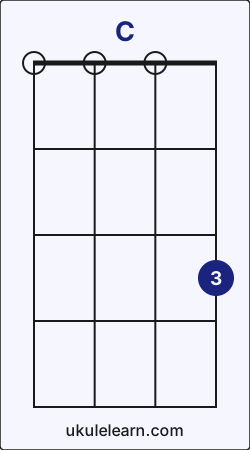 Ukulele C chord diagram
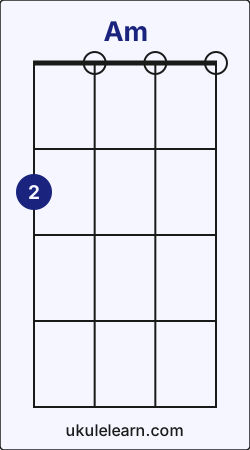 Ukulele Am chord diagram
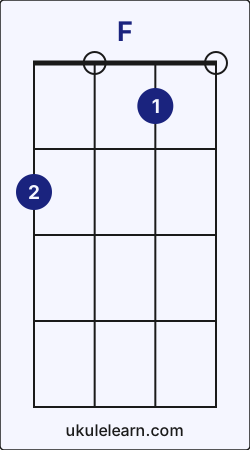 Ukulele F chord diagram
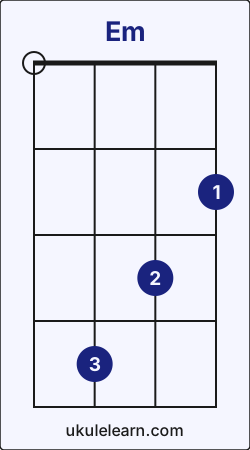 Ukulele Em chord diagram
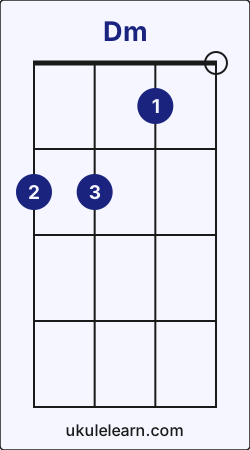 Ukulele Dm chord diagram
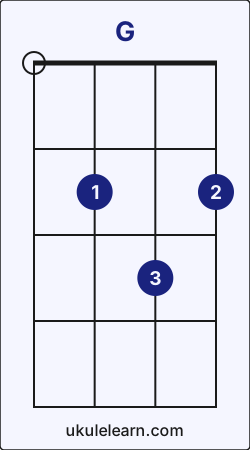 Ukulele G chord diagram
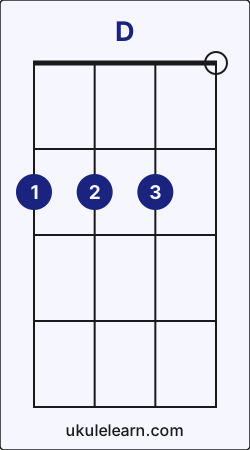 Ukulele D chord diagram
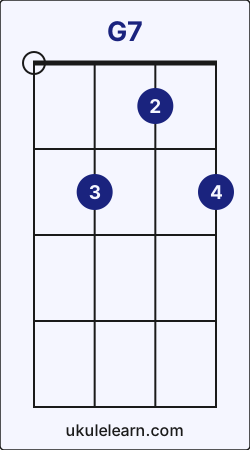 Ukulele G7 chord diagram
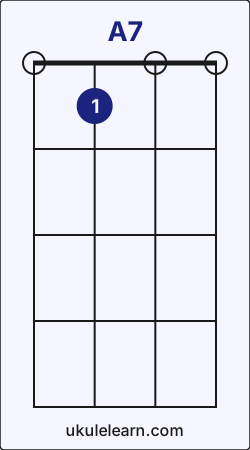 Ukulele A7 chord diagram
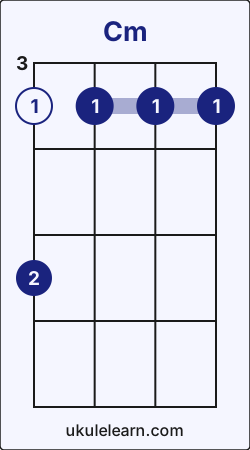 Ukulele Cm chord diagram
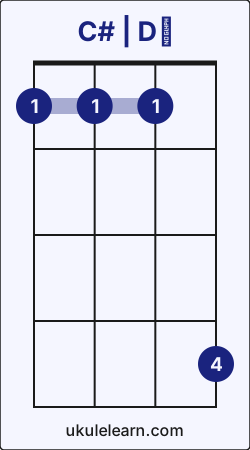 Ukulele C# | D♭ chord diagram
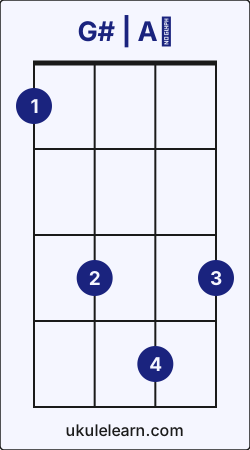 Ukulele G# | A♭ chord diagram
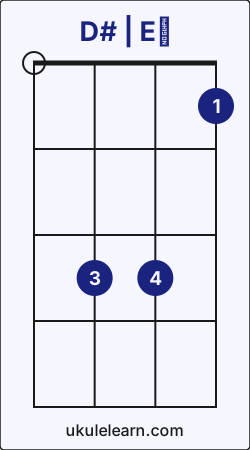 Ukulele D# | E♭ chord diagram
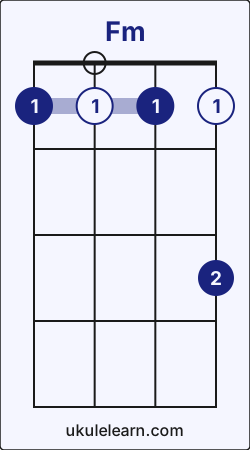 Ukulele Fm chord diagram
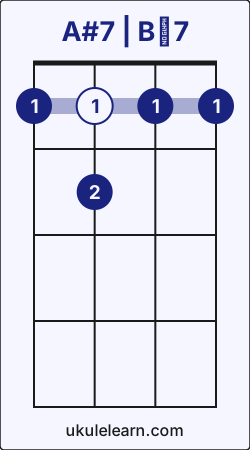 Ukulele A#7 | B♭7 chord diagram
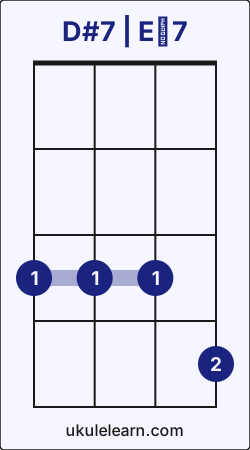 Ukulele D#7 | E♭7 chord diagram
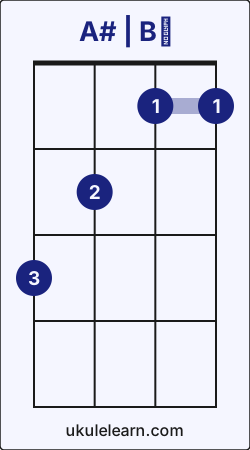 Ukulele A# | B♭ chord diagram
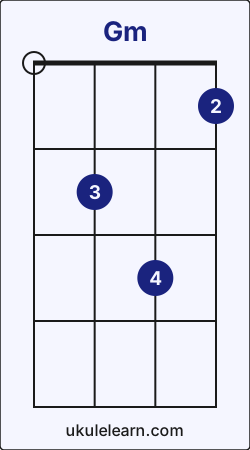 Ukulele Gm chord diagram
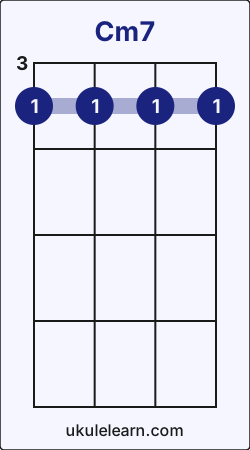 Ukulele Cm7 chord diagram
[Opening]
[C]Midnight, not a sound from the [Am]pavement
Has the moon lost her [F]memory?
She is smiling a[Em]lone
In the [Dm]lamplight, the withered leaves co[Am]llect at my feet
And the [G]wind be[F]gins to [C]moan
[section 2]
[C]Memory, all alone in the [Am]moonlight
I can smile at the [F]old days
I was beautiful [Em]then
I re[Dm]member the time I knew what [Am]happiness was
Let the [G]memory [F]live a[C]gain
[section 3]
[Em]Every [F]streetlamp [Em]seems to [F]beat
a [Em]fata[C]lis[D]tic [G]warning
[Em]Someone [Am]mutters, and a [D]streetlamp [G7]gutters,
And [Em]soon it [A7]will be [D]morning.
[section 4]
[C]Daylight, I must wait for the [Am]sunrise
I must think of a [F]new life
And I mustn’t give [Em]in.
When the [Dm]dawn comes, tonight will be a [Am]memory too
And a [G]new day [F]will be[C]gin
[section 5]
[Cm]Burnt out [Db]ends of [Cm]smokey [Db]days
The [Cm]stale cold [Ab]smell of [D#]morning
The [Cm]streetlamp [Fm]dies, another [Bb7]night is [D#7]over
A[Cm]nother [F]day is [Bb]dawning
[Closing]
[D#]Touch me!
It’s so easy to [Cm]leave me
All alone with the [Ab]memory of my days in the[Gm]sun
If you [Fm]touch me, you’ll understand what [Cm]happiness is
Look, a [Bb]new day [Cm7]Has be[D#]gun
How to play Memory on Ukulele (Step-by-step)
Elaine Paige - Memory on ukulele requires 19 chords and 35 core chord transitions. You can find the full step-by-step guide below. Before you start, tune your instrument. The song uses the ↓-↓↑-↓↑-↓↑ pattern; practice it muted first, or simplify to downstrokes while you learn the changes.
Memory uses these transitions most often: F → Em (5), Am → F (3), and Am → G (3). These transitions may feel a little challenging at first, but with steady practice you can play this song quickly.When you are ready, begin with C - Am chord transition.
1. C → Am chord transition
To move from C to Am;
- While playing C, lift your ring finger from A string fret 3.
- Place middle finger on G string fret 2.
2. Am → F chord transition
To move from Am to F;
- Keep middle finger on G string fret 2.
- Place index finger on E string fret 1.
3. F → Em chord transition
To move from F to Em;
- Lift your index finger from E string fret 1 and place it on A string fret 2.
- Slide your middle finger from G string fret 2 to E string fret 3.
- Place ring finger on C string fret 4.
4. Em → Dm chord transition
To move from Em to Dm;
- Lift your index finger from A string fret 2 and place it on E string fret 1.
- Slide your middle finger from E string fret 3 to G string fret 2.
- Slide your ring finger on C string from fret 4 to fret 2.
5. Dm → Am chord transition
To move from Dm to Am;
- While playing Dm, first lift your index finger and ring finger.
- Keep middle finger on G string fret 2.
6. Am → G chord transition
To move from Am to G;
- Lift your middle finger from G string fret 2 and place it on A string fret 2.
- Place index finger on C string fret 2.
- Place ring finger on E string fret 3.
7. G → F chord transition
To move from G to F;
- While playing G, lift your ring finger from E string fret 3.
- Lift your index finger from C string fret 2 and place it on E string fret 1.
- Slide your middle finger from A string fret 2 to G string fret 2.
8. F → C chord transition
To move from F to C;
- While playing F, first lift your index finger and middle finger.
- Place ring finger on A string fret 3.
9. C → Em chord transition
To move from C to Em;
- Lift your ring finger from A string fret 3 and place it on C string fret 4.
- Place index finger on A string fret 2.
- Place middle finger on E string fret 3.
10. C → D chord transition
To move from C to D;
- Lift your ring finger from A string fret 3 and place it on E string fret 2.
- Place index finger on G string fret 2.
- Place middle finger on C string fret 2.
11. D → G chord transition
To move from D to G;
- Lift your index finger from G string fret 2 and place it on C string fret 2.
- Slide your middle finger from C string fret 2 to A string fret 2.
- Slide your ring finger on E string from fret 2 to fret 3.
12. G → Em chord transition
To move from G to Em;
- Lift your index finger from C string fret 2 and place it on A string fret 2.
- Slide your middle finger from A string fret 2 to E string fret 3.
- Lift your ring finger from E string fret 3 and place it on C string fret 4.
13. Em → Am chord transition
To move from Em to Am;
- While playing Em, first lift your index finger and ring finger.
- Lift your middle finger from E string fret 3 and place it on G string fret 2.
14. Am → D chord transition
To move from Am to D;
- Lift your middle finger from G string fret 2 and place it on C string fret 2.
- Place index finger on G string fret 2.
- Place ring finger on E string fret 2.
15. D → G7 chord transition
To move from D to G7;
- Lift your index finger from G string fret 2 and place it on E string fret 1.
- Keep middle finger on C string fret 2.
- Slide your ring finger from E string fret 2 to A string fret 2.
16. G7 → Em chord transition
To move from G7 to Em;
- Lift your index finger from E string fret 1 and place it on A string fret 2.
- Slide your middle finger from C string fret 2 to E string fret 3.
- Lift your ring finger from A string fret 2 and place it on C string fret 4.
17. Em → A7 chord transition
To move from Em to A7;
- While playing Em, first lift your middle finger and ring finger.
- Lift your index finger from A string fret 2 and place it on C string fret 1.
18. A7 → D chord transition
To move from A7 to D;
- Lift your index finger from C string fret 1 and place it on G string fret 2.
- Place middle finger on C string fret 2.
- Place ring finger on E string fret 2.
19. C → Cm chord transition
To move from C to Cm;
- While playing C, lift your ring finger from A string fret 3.
- Place index finger on C string fret 3.
20. Cm → Db chord transition
To move from Cm to Db;
- Lift your index finger from C string fret 3 and place it on G string fret 1.
- Place pinky on A string fret 4.
21. Cm → Ab chord transition
To move from Cm to Ab;
- Lift your index finger from C string fret 3 and place it on G string fret 1.
- Place middle finger on C string fret 3.
- Place ring finger on A string fret 3.
- Place pinky on E string fret 4.
22. Ab → D# chord transition
To move from Ab to D#;
- While playing Ab, lift your middle finger from C string fret 3.
- Lift your index finger from G string fret 1 and place it on A string fret 1.
- Slide your ring finger from A string fret 3 to C string fret 3.
- Slide your pinky on E string from fret 4 to fret 3.
23. D# → Cm chord transition
To move from D# to Cm;
- While playing D#, first lift your ring finger and pinky.
- Lift your index finger from A string fret 1 and place it on C string fret 3.
24. Cm → Fm chord transition
To move from Cm to Fm;
- Lift your index finger from C string fret 3 and place it on G string fret 1.
- Place middle finger on E string fret 1.
- Place pinky on A string fret 3.
25. Fm → Bb7 chord transition
To move from Fm to Bb7;
- While playing Fm, lift your pinky from A string fret 3.
- Keep index finger on G string fret 1.
- Lift your middle finger from E string fret 1 and place it on C string fret 2.
26. Bb7 → D#7 chord transition
To move from Bb7 to D#7;
- Slide your index finger on G string from fret 1 to fret 3.
- Slide your middle finger from C string fret 2 to A string fret 4.
27. D#7 → Cm chord transition
To move from D#7 to Cm;
- While playing D#7, lift your middle finger from A string fret 4.
- Lift your index finger from G string fret 3 and place it on C string fret 3.
28. Cm → F chord transition
To move from Cm to F;
- Lift your index finger from C string fret 3 and place it on E string fret 1.
- Place middle finger on G string fret 2.
29. F → Bb chord transition
To move from F to Bb;
- Keep index finger on E string fret 1.
- Lift your middle finger from G string fret 2 and place it on C string fret 2.
- Place ring finger on G string fret 3.
30. Bb → D# chord transition
To move from Bb to D#;
- While playing Bb, lift your middle finger from C string fret 2.
- Lift your index finger from E string fret 1 and place it on A string fret 1.
- Slide your ring finger from G string fret 3 to C string fret 3.
- Place pinky on E string fret 3.
31. Ab → Gm chord transition
To move from Ab to Gm;
- While playing Ab, lift your pinky from E string fret 4.
- Lift your index finger from G string fret 1 and place it on A string fret 1.
- Slide your middle finger on C string from fret 3 to fret 2.
- Lift your ring finger from A string fret 3 and place it on E string fret 3.
32. Gm → Fm chord transition
To move from Gm to Fm;
- While playing Gm, lift your ring finger from E string fret 3.
- Lift your index finger from A string fret 1 and place it on G string fret 1.
- Slide your middle finger from C string fret 2 to E string fret 1.
- Place pinky on A string fret 3.
33. Cm → Bb chord transition
To move from Cm to Bb;
- Lift your index finger from C string fret 3 and place it on E string fret 1.
- Place middle finger on C string fret 2.
- Place ring finger on G string fret 3.
34. Bb → Cm7 chord transition
To move from Bb to Cm7;
- While playing Bb, first lift your middle finger and ring finger.
- Lift your index finger from E string fret 1 and place it on G string fret 3.
35. Cm7 → D# chord transition
To move from Cm7 to D#;
- Lift your index finger from G string fret 3 and place it on A string fret 1.
- Place ring finger on C string fret 3.
- Place pinky on E string fret 3.
Memory chord transition analysis
A short, data-driven summary of the chord flow in Memory.
- Memory includes 63 chord transitions, 35 of them unique.
- These transitions represent 0.02% of all chord transitions in Ukulelearn.
- Memory contains 7 of the top 10 transitions across Ukulelearn.
- These transition patterns show how Memory connects to the rest of Ukulelearn. Mastering them helps you move to similar songs faster.After F, the most likely next chords across Ukulelearn are C (40%), G (21%), and Am (11%).
- F → C: 40%
- F → Bb: 5%
After Em, the most likely next chords across Ukulelearn are C (27%), G (18%), and D (17%).- Em → C: 27%
- Em → Am: 12%