
Bruno Major - Old Fashioned Ukulele Chords
Before you play, tune your ukulele and use the tools below to set up your view and flow.
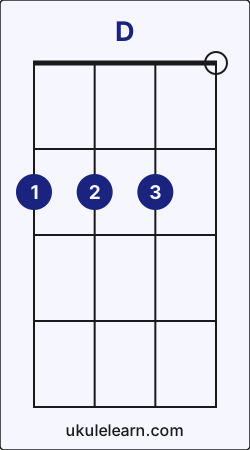 Ukulele D chord diagram
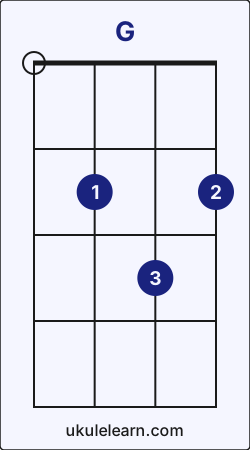 Ukulele G chord diagram
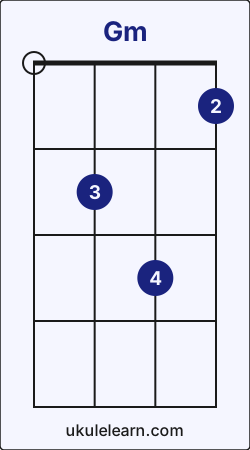 Ukulele Gm chord diagram
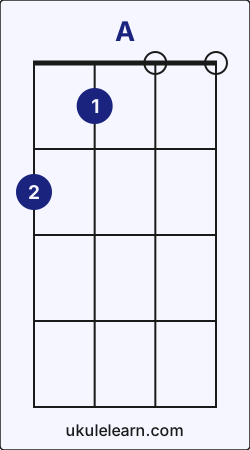 Ukulele A chord diagram
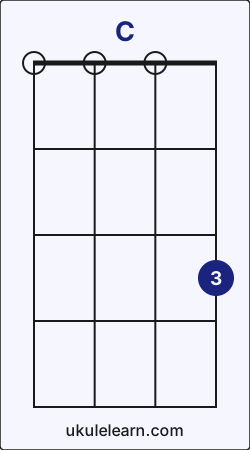 Ukulele C chord diagram
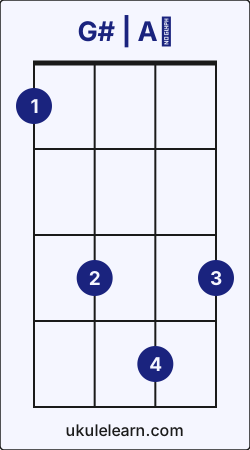 Ukulele G# | A♭ chord diagram
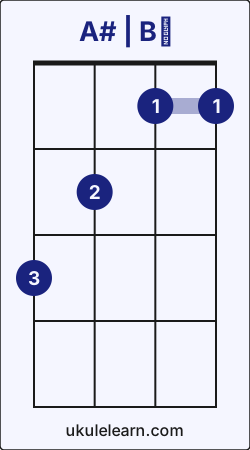 Ukulele A# | B♭ chord diagram
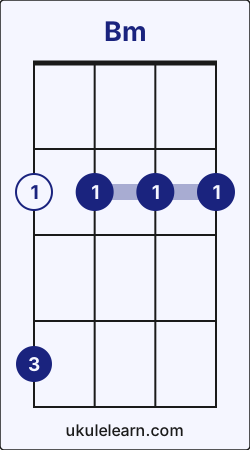 Ukulele Bm chord diagram
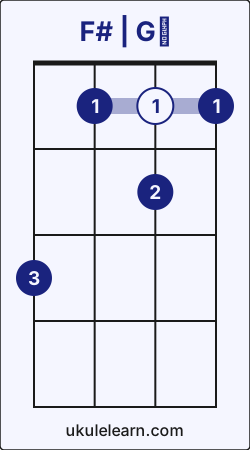 Ukulele F# | G♭ chord diagram
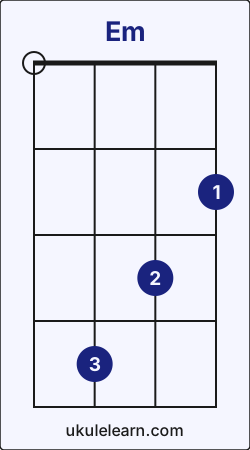 Ukulele Em chord diagram
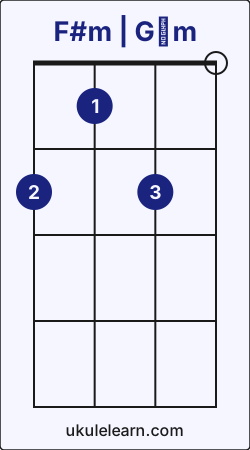 Ukulele F#m | G♭m chord diagram
[Opening]
I know it’s not [D]very cool, standing here, serenading like a fool
But [G]I don’t care, I’ll [Gm]gladly be a [D]fool for you
[section 2]
[G] [A] [D]
I know the [D]idea isn’t new, to fall in love with someone on first view
But [G]I don’t care, I [Gm]think I’ll fall in [C]love with [D]you
[chorus]
[A]
[Ab]I’ll put on my [G]Sunday best, [Ab]you pick out your [A] [Bb]favourite [Bm]dress
[A]I’ll take you [D] [F#]somewhere [Em]new, I’ll be [A]old-fashioned for [D]you
[section 3]
[G] [A] [D]
It’s a [D]cliché or so I’m told, to give your jacket up to someone when it’s cold
[G]But I don’t care, [Gm]I don’t [C]mind the midnight [D]air. Oh, oh
[Closing]
[D]I’ll walk you home, to [Bm]your front door
I’ll [F#m]say farewell until the [D]morning calls
[D]I’ll be smiling a [Bb]bigger [C] [D]smile than before
[chorus]
[A]
[Ab]I’ll put on my [G]Sunday best, [Ab]you pick out your [A] [Bb]favourite [Bm]dress
[A]I’ll take you [D] [F#]somewhere [Em]new [A]
[Ab]I’ll put on my [G]Sunday best, [Ab]you pick out your [A] [Bb]favourite [Bm]dress
[A]I’ll take you [D] [F#]somewhere [Em]new, I’ll be [A]old-fashioned for [D]you
[D]Old fashioned for you [D]
How to play Old Fashioned on Ukulele (Step-by-step)
Bruno Major - Old Fashioned on ukulele requires 11 chords and 20 core chord transitions. You can find the full step-by-step guide below. Before you start, tune your instrument. The song uses the ↓-↓↑-↓↑-↓↑ pattern; practice it muted first, or simplify to downstrokes while you learn the changes.
Old Fashioned uses these transitions most often: A → D (7), D → G (5), and A → Ab (3). These transitions may feel a little challenging at first, but with steady practice you can play this song quickly.When you are ready, begin with D - G chord transition.
1. D → G chord transition
To move from D to G;
- Lift your index finger from G string fret 2 and place it on C string fret 2.
- Slide your middle finger from C string fret 2 to A string fret 2.
- Slide your ring finger on E string from fret 2 to fret 3.
2. G → Gm chord transition
To move from G to Gm;
- Lift your index finger from C string fret 2 and place it on A string fret 1.
- Slide your middle finger from A string fret 2 to C string fret 2.
- Keep ring finger on E string fret 3.
3. Gm → D chord transition
To move from Gm to D;
- Lift your index finger from A string fret 1 and place it on G string fret 2.
- Keep middle finger on C string fret 2.
- Slide your ring finger on E string from fret 3 to fret 2.
4. G → A chord transition
To move from G to A;
- While playing G, lift your ring finger from E string fret 3.
- Slide your index finger on C string from fret 2 to fret 1.
- Slide your middle finger from A string fret 2 to G string fret 2.
5. A → D chord transition
To move from A to D;
- Lift your index finger from C string fret 1 and place it on G string fret 2.
- Slide your middle finger from G string fret 2 to C string fret 2.
- Place ring finger on E string fret 2.
6. Gm → C chord transition
To move from Gm to C;
- While playing Gm, first lift your index finger and middle finger.
- Lift your ring finger from E string fret 3 and place it on A string fret 3.
7. C → D chord transition
To move from C to D;
- Lift your ring finger from A string fret 3 and place it on E string fret 2.
- Place index finger on G string fret 2.
- Place middle finger on C string fret 2.
8. A → Ab chord transition
To move from A to Ab;
- Lift your index finger from C string fret 1 and place it on G string fret 1.
- Slide your middle finger from G string fret 2 to C string fret 3.
- Place ring finger on A string fret 3.
- Place pinky on E string fret 4.
9. Ab → G chord transition
To move from Ab to G;
- While playing Ab, lift your pinky from E string fret 4.
- Lift your index finger from G string fret 1 and place it on C string fret 2.
- Slide your middle finger from C string fret 3 to A string fret 2.
- Lift your ring finger from A string fret 3 and place it on E string fret 3.
10. A → Bb chord transition
To move from A to Bb;
- Lift your index finger from C string fret 1 and place it on E string fret 1.
- Slide your middle finger from G string fret 2 to C string fret 2.
- Place ring finger on G string fret 3.
11. Bb → Bm chord transition
To move from Bb to Bm;
- While playing Bb, lift your middle finger from C string fret 2.
- Lift your index finger from E string fret 1 and place it on C string fret 2.
- Slide your ring finger on G string from fret 3 to fret 4.
12. Bm → A chord transition
To move from Bm to A;
- While playing Bm, lift your ring finger from G string fret 4.
- Slide your index finger on C string from fret 2 to fret 1.
- Place middle finger on G string fret 2.
13. D → F# chord transition
To move from D to F#;
- Lift your index finger from G string fret 2 and place it on C string fret 1.
- Slide your middle finger from C string fret 2 to E string fret 2.
- Lift your ring finger from E string fret 2 and place it on G string fret 3.
14. F# → Em chord transition
To move from F# to Em;
- Lift your index finger from C string fret 1 and place it on A string fret 2.
- Slide your middle finger on E string from fret 2 to fret 3.
- Lift your ring finger from G string fret 3 and place it on C string fret 4.
15. Em → A chord transition
To move from Em to A;
- While playing Em, lift your ring finger from C string fret 4.
- Lift your index finger from A string fret 2 and place it on C string fret 1.
- Slide your middle finger from E string fret 3 to G string fret 2.
16. D → Bm chord transition
To move from D to Bm;
- While playing D, lift your middle finger from C string fret 2.
- Lift your index finger from G string fret 2 and place it on C string fret 2.
- Slide your ring finger from E string fret 2 to G string fret 4.
17. Bm → F#m chord transition
To move from Bm to F#m;
- Slide your index finger on C string from fret 2 to fret 1.
- Slide your ring finger from G string fret 4 to E string fret 2.
- Place middle finger on G string fret 2.
18. F#m → D chord transition
To move from F#m to D;
- Lift your index finger from C string fret 1 and place it on G string fret 2.
- Slide your middle finger from G string fret 2 to C string fret 2.
- Keep ring finger on E string fret 2.
19. D → Bb chord transition
To move from D to Bb;
- Lift your index finger from G string fret 2 and place it on E string fret 1.
- Keep middle finger on C string fret 2.
- Slide your ring finger from E string fret 2 to G string fret 3.
20. Bb → C chord transition
To move from Bb to C;
- While playing Bb, first lift your index finger and middle finger.
- Lift your ring finger from G string fret 3 and place it on A string fret 3.
Old Fashioned chord transition analysis
A short, data-driven summary of the chord flow in Old Fashioned.
- Old Fashioned includes 60 chord transitions, 20 of them unique.
- These transitions represent 0.02% of all chord transitions in Ukulelearn.
- Old Fashioned contains 3 of the top 10 transitions across Ukulelearn.
- These transition patterns show how Old Fashioned connects to the rest of Ukulelearn. Mastering them helps you move to similar songs faster.After D, the most likely next chords across Ukulelearn are G (29%), A (17%), and Em (17%).
- D → G: 29%
- D → A: 17%
After A, the most likely next chords across Ukulelearn are D (29%), G (13%), and E (12%).- A → D: 29%
- A → Bb: 0%