
Jodi Benson - Part Of Your World Ukulele Chords
Before you play, tune your ukulele and use the tools below to set up your view and flow.
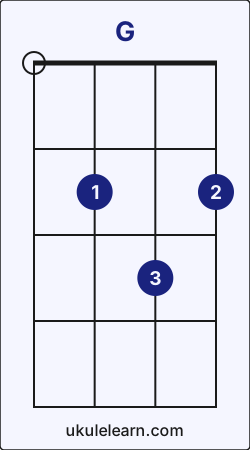 Ukulele G chord diagram
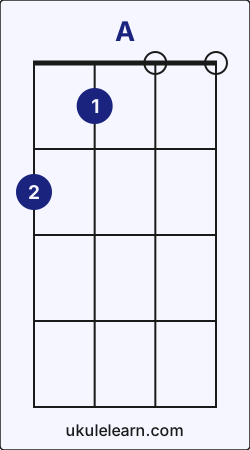 Ukulele A chord diagram
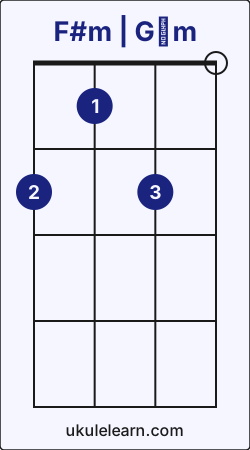 Ukulele F#m | G♭m chord diagram
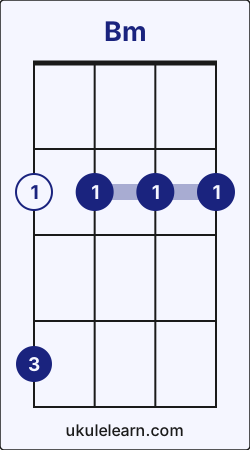 Ukulele Bm chord diagram
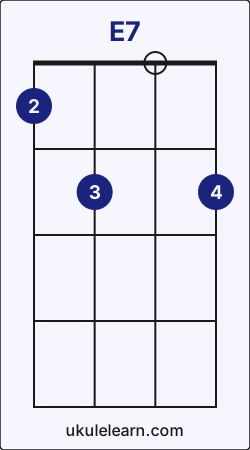 Ukulele E7 chord diagram
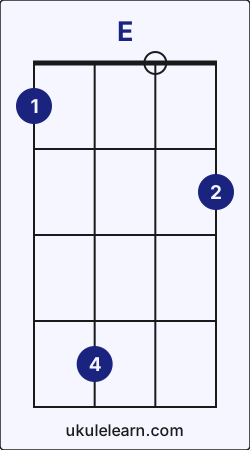 Ukulele E chord diagram
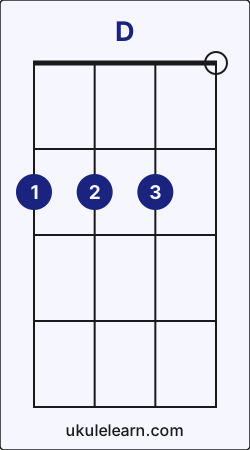 Ukulele D chord diagram
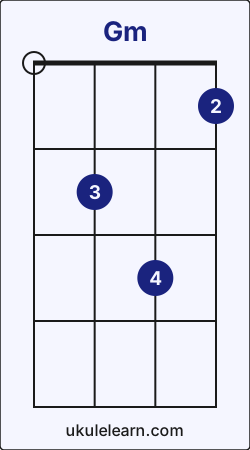 Ukulele Gm chord diagram
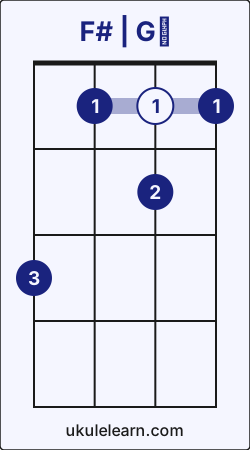 Ukulele F# | G♭ chord diagram
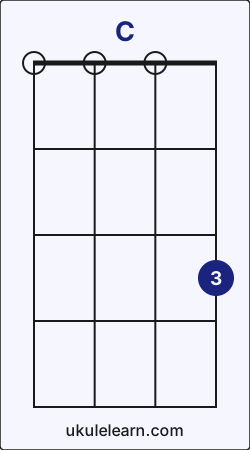 Ukulele C chord diagram
[Opening]
[G]Look at this stuff, [A]isn’t it neat?
[G]Wouldn’t you think my [A]collection’s complete?
[F#m]Wouldn’t you think I’m the [Bm]girl, the girl who has [E7]everything?
[G]Look at this trove, [A]treasures untold
[G]How many wonders can [A]one cavern hold?
[F#m]Looking around here you’d [Bm]think,
[Bm]Sure, she’s got [E7]everything…
[section 2]
[Bm]I’ve got gadgets and gizmos a-plenty,
[F#m]I’ve got whozits and whatzits galore,
[Bm]You want thingamabobs?, [E7]I’ve got twenty!
But who [E]cares? No big [E]deal, [A]I want [A]more.
[section 3]
[D]I wanna be where the [F#m]people are,
[G]I wanna see, wanna [A]see them dancing,
[Bm]Walking around on those, [F#m]what do you call them?
[G]Oh [A]feet! [D]Flipping your fins, you don’t [F#m]get too far,
[G]Legs are required for [A]jumping, dancing,
[Bm]Strolling along down a, [F#m]what’s that word again? [G]Street. [A]
[section 4]
Up where they [D]walk, up where they [D]run,
Up where they [G]stay all day in the [Gm]sun,
[D]Wandering free wish I could [A]be,
Part of that [D]world…
[section 5]
What would I [G]give if I could [A]live out of these [F#m]waters? [Bm]
What would I [G]pay to spend a [A]day warm on the [F#m]sand? [D]
Betcha on [G]land they [A]understand,
That they don’t [F#m] [F#]reprimand their [Bm]daughters,
Bright young [E]women sick of swimming, ready to [C]stand. [A]
[section 6]
[D]I’m ready to know what the [F#m]people know
[G]Ask them my questions and [A]get some answers
[Bm]What’s a fire and [F#m]why does it, what’s the word? [G]Burn? [A]
[Closing]
[D]When’s it my turn?
Wouldn’t I [D]love, love to [G]explore that shore up [Gm]above?
Out of the [D]sea, [A]wish I could [A]be,
[D]Part of that [D]world… [D] [A]
How to play Part Of Your World on Ukulele (Step-by-step)
Jodi Benson - Part Of Your World on ukulele requires 10 chords and 20 core chord transitions. You can find the full step-by-step guide below. Before you start, tune your instrument. The song uses the ↓-↓↑-↑↓↑ pattern; practice it muted first, or simplify to downstrokes while you learn the changes.
Part Of Your World uses these transitions most often: G → A (13), A → D (7), and F#m → G (6). These transitions may feel a little challenging at first, but with steady practice you can play this song quickly.When you are ready, begin with G - A chord transition.
1. G → A chord transition
To move from G to A;
- While playing G, lift your ring finger from E string fret 3.
- Slide your index finger on C string from fret 2 to fret 1.
- Slide your middle finger from A string fret 2 to G string fret 2.
2. A → F#m chord transition
To move from A to F#m;
- Keep index finger on C string fret 1.
- Keep middle finger on G string fret 2.
- Place ring finger on E string fret 2.
3. F#m → Bm chord transition
To move from F#m to Bm;
- While playing F#m, lift your middle finger from G string fret 2.
- Slide your index finger on C string from fret 1 to fret 2.
- Slide your ring finger from E string fret 2 to G string fret 4.
4. Bm → E7 chord transition
To move from Bm to E7;
- Lift your index finger from C string fret 2 and place it on G string fret 1.
- Slide your ring finger from G string fret 4 to A string fret 2.
- Place middle finger on C string fret 2.
5. E7 → G chord transition
To move from E7 to G;
- Lift your index finger from G string fret 1 and place it on C string fret 2.
- Slide your middle finger from C string fret 2 to A string fret 2.
- Lift your ring finger from A string fret 2 and place it on E string fret 3.
6. E7 → E chord transition
To move from E7 to E;
- While playing E7, lift your ring finger from A string fret 2.
- Slide your index finger on G string from fret 1 to fret 4.
- Slide your middle finger from C string fret 2 to A string fret 2.
7. E → A chord transition
To move from E to A;
- Lift your index finger from G string fret 4 and place it on C string fret 1.
- Slide your middle finger from A string fret 2 to G string fret 2.
8. A → D chord transition
To move from A to D;
- Lift your index finger from C string fret 1 and place it on G string fret 2.
- Slide your middle finger from G string fret 2 to C string fret 2.
- Place ring finger on E string fret 2.
9. D → F#m chord transition
To move from D to F#m;
- Lift your index finger from G string fret 2 and place it on C string fret 1.
- Slide your middle finger from C string fret 2 to G string fret 2.
- Keep ring finger on E string fret 2.
10. F#m → G chord transition
To move from F#m to G;
- Slide your index finger on C string from fret 1 to fret 2.
- Slide your middle finger from G string fret 2 to A string fret 2.
- Slide your ring finger on E string from fret 2 to fret 3.
11. A → Bm chord transition
To move from A to Bm;
- While playing A, lift your middle finger from G string fret 2.
- Slide your index finger on C string from fret 1 to fret 2.
- Place ring finger on G string fret 4.
12. D → G chord transition
To move from D to G;
- Lift your index finger from G string fret 2 and place it on C string fret 2.
- Slide your middle finger from C string fret 2 to A string fret 2.
- Slide your ring finger on E string from fret 2 to fret 3.
13. G → Gm chord transition
To move from G to Gm;
- Lift your index finger from C string fret 2 and place it on A string fret 1.
- Slide your middle finger from A string fret 2 to C string fret 2.
- Keep ring finger on E string fret 3.
14. Gm → D chord transition
To move from Gm to D;
- Lift your index finger from A string fret 1 and place it on G string fret 2.
- Keep middle finger on C string fret 2.
- Slide your ring finger on E string from fret 3 to fret 2.
15. Bm → G chord transition
To move from Bm to G;
- Keep index finger on C string fret 2.
- Lift your ring finger from G string fret 4 and place it on E string fret 3.
- Place middle finger on A string fret 2.
16. F#m → F# chord transition
To move from F#m to F#;
- Keep index finger on C string fret 1.
- Lift your middle finger from G string fret 2 and place it on E string fret 2.
- Slide your ring finger from E string fret 2 to G string fret 3.
17. F# → Bm chord transition
To move from F# to Bm;
- While playing F#, lift your middle finger from E string fret 2.
- Slide your index finger on C string from fret 1 to fret 2.
- Slide your ring finger on G string from fret 3 to fret 4.
18. Bm → E chord transition
To move from Bm to E;
- While playing Bm, lift your ring finger from G string fret 4.
- Lift your index finger from C string fret 2 and place it on G string fret 4.
- Place middle finger on A string fret 2.
19. E → C chord transition
To move from E to C;
- While playing E, first lift your index finger and middle finger.
- Place ring finger on A string fret 3.
20. C → A chord transition
To move from C to A;
- While playing C, lift your ring finger from A string fret 3.
- Place index finger on C string fret 1.
- Place middle finger on G string fret 2.
Part Of Your World chord transition analysis
A short, data-driven summary of the chord flow in Part Of Your World.
- Part Of Your World includes 72 chord transitions, 20 of them unique.
- These transitions represent 0.02% of all chord transitions in Ukulelearn.
- Part Of Your World contains 2 of the top 10 transitions across Ukulelearn.
- These transition patterns show how Part Of Your World connects to the rest of Ukulelearn. Mastering them helps you move to similar songs faster.After A, the most likely next chords across Ukulelearn are D (29%), G (13%), and E (12%).
- A → D: 29%
- A → G: 13%
After G, the most likely next chords across Ukulelearn are C (25%), D (24%), and Am (13%).- G → A: 6%
- G → Gm: 0%