
Kermit the Frog - The Rainbow Connection Ukulele Chords
Before you play, tune your ukulele and use the tools below to set up your view and flow.
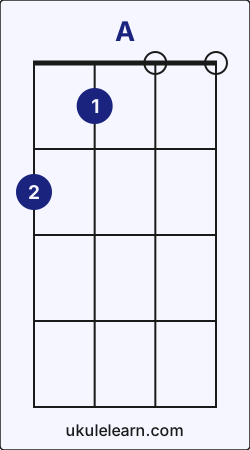 Ukulele A chord diagram
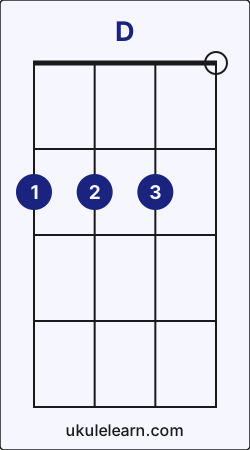 Ukulele D chord diagram
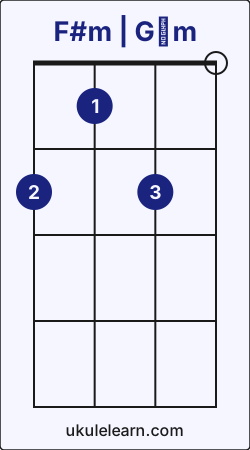 Ukulele F#m | G♭m chord diagram
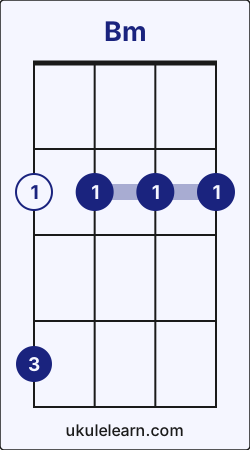 Ukulele Bm chord diagram
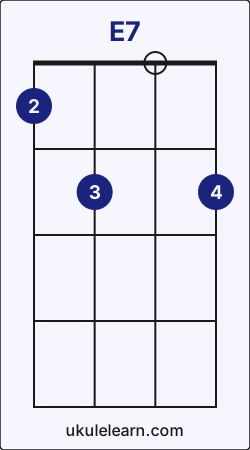 Ukulele E7 chord diagram
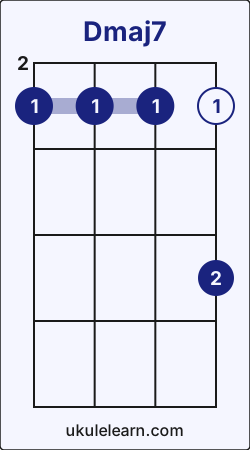 Ukulele Dmaj7 chord diagram
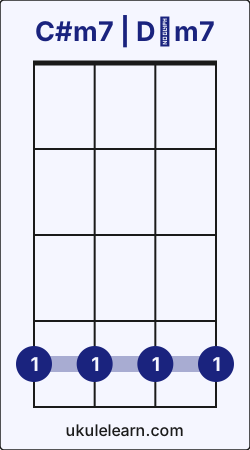 Ukulele C#m7 | D♭m7 chord diagram
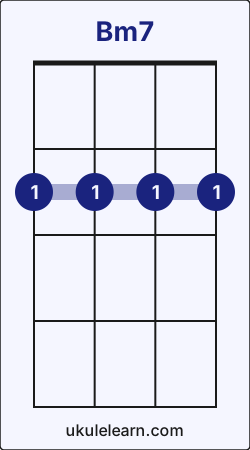 Ukulele Bm7 chord diagram
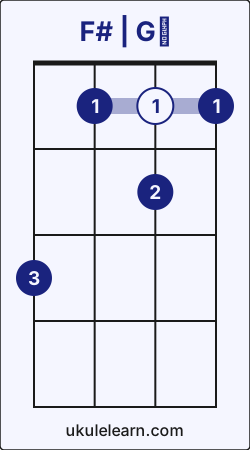 Ukulele F# | G♭ chord diagram
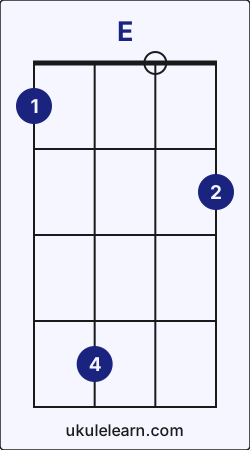 Ukulele E chord diagram
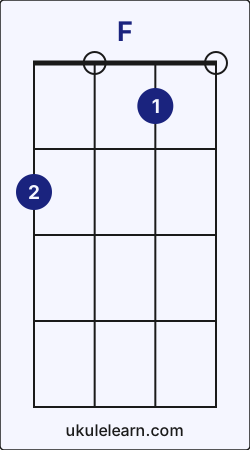 Ukulele F chord diagram
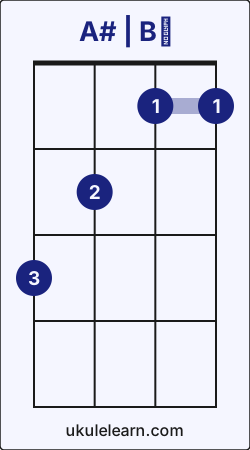 Ukulele A# | B♭ chord diagram
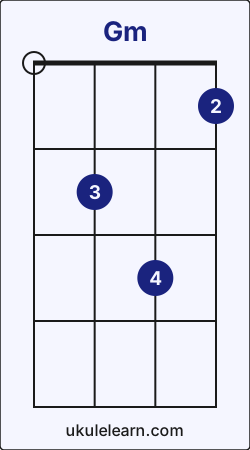 Ukulele Gm chord diagram
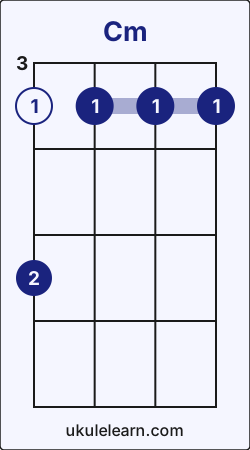 Ukulele Cm chord diagram
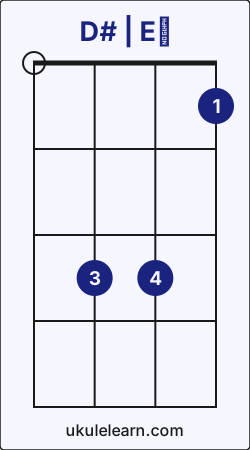 Ukulele D# | E♭ chord diagram
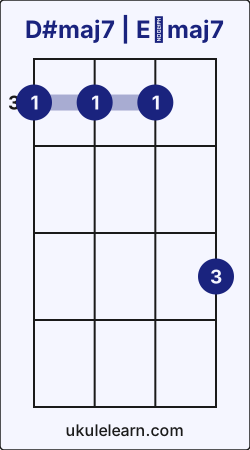 Ukulele D#maj7 | E♭maj7 chord diagram
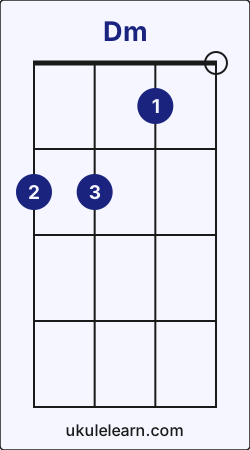 Ukulele Dm chord diagram
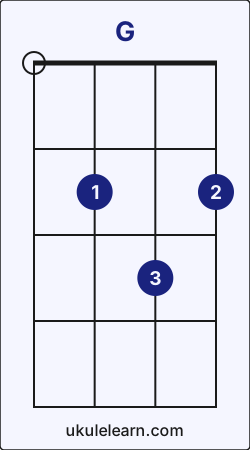 Ukulele G chord diagram
[Opening]
[A] [A] [A] [D] [D]
[A]Why are there [F#m]so many… [Bm]songs about [E7]rainbows
And [A]what’s on the [F#m]other [D]side? [E7]
[A]Rainbows are [F#m]visions but [Bm]only ill[E7]usions
And [A]rainbows have [F#m]nothing to [D]hide [E7]
[section 2]
[Dmaj7]So we’ve been told and some choose to believe it
[C#m7]I know they’re wrong, wait and see
[Bm7]Someday we’ll [E7]find it… the [C#m7]rainbow con[F#]nection
The [Bm]lovers… the [E7]dreamers… and [A]me [D]
[section 3]
[A]Who said that [F#m]every wish would [Bm]be heard and [E7]answered
When [A]wished on the [F#m]morning [D]star? [E7]
[A]Somebody [F#m]thought of that and [Bm]someone be[E7]lieved it
[A]Look what it’s [F#m]done so [D]far [E7]
[section 4]
[Dmaj7]What’s so amazing that keeps us star gazing
And [C#m7]what do we think we might see?
[Bm7]Someday we’ll [E7]find it the [C#m7]rainbow con[F#]nection
The [Bm]lovers the [E7]dreamers and [A]me
[section 5]
[E7]All of us [F#m]under its [E]spell
We [D]know that it’s [A]probably [E]ma[F]gic [F] [F]
[section 6]
[Bb]Have you been [Gm]half asleep… and [Cm]have you heard [F]voices?
[Bb]I’ve heard them [Gm]calling my [Eb]name [F]
[Bb]Is this the [Gm]sweet sound that [Cm]calls to young [F]sailors?
That [Bb]voice might be [Gm]one and the [Eb]same [F]
[section 7]
[Ebmaj7]I’ve heard it too many times to ignore it
It’s [Dm]something that I’m supposed to be
[Cm]Someday we’ll [F]find it the [Dm]rainbow con[G]nection.
The [Cm]lovers, the [F]dreamers and [Bb]me
[Closing]
[F]Laaada da [Gm]deeeda da [F]doo
La [Eb]daaada da [F]daa de da [Bb]dooo
How to play The Rainbow Connection on Ukulele (Step-by-step)
Kermit the Frog - The Rainbow Connection on ukulele requires 18 chords and 32 core chord transitions. You can find the full step-by-step guide below. Before you start, tune your instrument. The song uses the ↓-↓↑-↓↑-↓↑ pattern; practice it muted first, or simplify to downstrokes while you learn the changes.
The Rainbow Connection uses these transitions most often: A → F#m (8), E7 → A (8), and Bm → E7 (6). These transitions may feel a little challenging at first, but with steady practice you can play this song quickly.When you are ready, begin with A - D chord transition.
1. A → D chord transition
To move from A to D;
- Lift your index finger from C string fret 1 and place it on G string fret 2.
- Slide your middle finger from G string fret 2 to C string fret 2.
- Place ring finger on E string fret 2.
2. A → F#m chord transition
To move from A to F#m;
- Keep index finger on C string fret 1.
- Keep middle finger on G string fret 2.
- Place ring finger on E string fret 2.
3. F#m → Bm chord transition
To move from F#m to Bm;
- While playing F#m, lift your middle finger from G string fret 2.
- Slide your index finger on C string from fret 1 to fret 2.
- Slide your ring finger from E string fret 2 to G string fret 4.
4. Bm → E7 chord transition
To move from Bm to E7;
- Lift your index finger from C string fret 2 and place it on G string fret 1.
- Slide your ring finger from G string fret 4 to A string fret 2.
- Place middle finger on C string fret 2.
5. E7 → A chord transition
To move from E7 to A;
- While playing E7, lift your ring finger from A string fret 2.
- Lift your index finger from G string fret 1 and place it on C string fret 1.
- Slide your middle finger from C string fret 2 to G string fret 2.
6. F#m → D chord transition
To move from F#m to D;
- Lift your index finger from C string fret 1 and place it on G string fret 2.
- Slide your middle finger from G string fret 2 to C string fret 2.
- Keep ring finger on E string fret 2.
7. D → E7 chord transition
To move from D to E7;
- Slide your index finger on G string from fret 2 to fret 1.
- Keep middle finger on C string fret 2.
- Slide your ring finger from E string fret 2 to A string fret 2.
8. E7 → Dmaj7 chord transition
To move from E7 to Dmaj7;
- While playing E7, lift your middle finger from C string fret 2.
- Slide your index finger on G string from fret 1 to fret 2.
- Slide your ring finger on A string from fret 2 to fret 4.
9. Dmaj7 → C#m7 chord transition
To move from Dmaj7 to C#m7;
- While playing Dmaj7, lift your ring finger from A string fret 4.
- Slide your index finger on G string from fret 2 to fret 4.
10. C#m7 → Bm7 chord transition
To move from C#m7 to Bm7;
- Slide your index finger on G string from fret 4 to fret 2.
11. Bm7 → E7 chord transition
To move from Bm7 to E7;
- Slide your index finger on G string from fret 2 to fret 1.
- Place middle finger on C string fret 2.
- Place ring finger on A string fret 2.
12. E7 → C#m7 chord transition
To move from E7 to C#m7;
- While playing E7, first lift your middle finger and ring finger.
- Slide your index finger on G string from fret 1 to fret 4.
13. C#m7 → F# chord transition
To move from C#m7 to F#;
- Lift your index finger from G string fret 4 and place it on C string fret 1.
- Place middle finger on E string fret 2.
- Place ring finger on G string fret 3.
14. F# → Bm chord transition
To move from F# to Bm;
- While playing F#, lift your middle finger from E string fret 2.
- Slide your index finger on C string from fret 1 to fret 2.
- Slide your ring finger on G string from fret 3 to fret 4.
15. E7 → F#m chord transition
To move from E7 to F#m;
- Lift your index finger from G string fret 1 and place it on C string fret 1.
- Slide your middle finger from C string fret 2 to G string fret 2.
- Lift your ring finger from A string fret 2 and place it on E string fret 2.
16. F#m → E chord transition
To move from F#m to E;
- While playing F#m, lift your ring finger from E string fret 2.
- Lift your index finger from C string fret 1 and place it on G string fret 4.
- Slide your middle finger from G string fret 2 to A string fret 2.
17. E → D chord transition
To move from E to D;
- Slide your index finger on G string from fret 4 to fret 2.
- Slide your middle finger from A string fret 2 to C string fret 2.
- Place ring finger on E string fret 2.
18. A → E chord transition
To move from A to E;
- Lift your index finger from C string fret 1 and place it on G string fret 4.
- Slide your middle finger from G string fret 2 to A string fret 2.
19. E → F chord transition
To move from E to F;
- Lift your index finger from G string fret 4 and place it on E string fret 1.
- Slide your middle finger from A string fret 2 to G string fret 2.
20. F → Bb chord transition
To move from F to Bb;
- Keep index finger on E string fret 1.
- Lift your middle finger from G string fret 2 and place it on C string fret 2.
- Place ring finger on G string fret 3.
21. Bb → Gm chord transition
To move from Bb to Gm;
- Lift your index finger from E string fret 1 and place it on A string fret 1.
- Keep middle finger on C string fret 2.
- Slide your ring finger from G string fret 3 to E string fret 3.
22. Gm → Cm chord transition
To move from Gm to Cm;
- While playing Gm, first lift your middle finger and ring finger.
- Lift your index finger from A string fret 1 and place it on C string fret 3.
23. Cm → F chord transition
To move from Cm to F;
- Lift your index finger from C string fret 3 and place it on E string fret 1.
- Place middle finger on G string fret 2.
24. Gm → Eb chord transition
To move from Gm to Eb;
- While playing Gm, lift your middle finger from C string fret 2.
- Keep index finger on A string fret 1.
- Lift your ring finger from E string fret 3 and place it on C string fret 3.
- Place pinky on E string fret 3.
25. Eb → F chord transition
To move from Eb to F;
- While playing Eb, first lift your ring finger and pinky.
- Lift your index finger from A string fret 1 and place it on E string fret 1.
- Place middle finger on G string fret 2.
26. F → Ebmaj7 chord transition
To move from F to Ebmaj7;
- While playing F, lift your middle finger from G string fret 2.
- Lift your index finger from E string fret 1 and place it on G string fret 3.
- Place ring finger on A string fret 5.
27. Ebmaj7 → Dm chord transition
To move from Ebmaj7 to Dm;
- Lift your index finger from G string fret 3 and place it on E string fret 1.
- Slide your ring finger from A string fret 5 to C string fret 2.
- Place middle finger on G string fret 2.
28. Dm → Cm chord transition
To move from Dm to Cm;
- While playing Dm, first lift your middle finger and ring finger.
- Lift your index finger from E string fret 1 and place it on C string fret 3.
29. F → Dm chord transition
To move from F to Dm;
- Keep index finger on E string fret 1.
- Keep middle finger on G string fret 2.
- Place ring finger on C string fret 2.
30. Dm → G chord transition
To move from Dm to G;
- Lift your index finger from E string fret 1 and place it on C string fret 2.
- Slide your middle finger from G string fret 2 to A string fret 2.
- Lift your ring finger from C string fret 2 and place it on E string fret 3.
31. G → Cm chord transition
To move from G to Cm;
- While playing G, first lift your middle finger and ring finger.
- Slide your index finger on C string from fret 2 to fret 3.
32. F → Gm chord transition
To move from F to Gm;
- Lift your index finger from E string fret 1 and place it on A string fret 1.
- Slide your middle finger from G string fret 2 to C string fret 2.
- Place ring finger on E string fret 3.
The Rainbow Connection chord transition analysis
A short, data-driven summary of the chord flow in The Rainbow Connection.
- The Rainbow Connection includes 90 chord transitions, 32 of them unique.
- These transitions represent 0.02% of all chord transitions in Ukulelearn.
- The Rainbow Connection contains 1 of the top 10 transitions across Ukulelearn.
- These transition patterns show how The Rainbow Connection connects to the rest of Ukulelearn. Mastering them helps you move to similar songs faster.After A, the most likely next chords across Ukulelearn are D (29%), G (13%), and E (12%).
- A → D: 29%
- A → E: 12%
After E7, the most likely next chords across Ukulelearn are A (31%), Am (28%), and A7 (7%).- E7 → A: 31%
- E7 → F#m: 3%