
Gary Barlow - Requiem Ukulele Chords
Before you play, tune your ukulele and use the tools below to set up your view and flow.
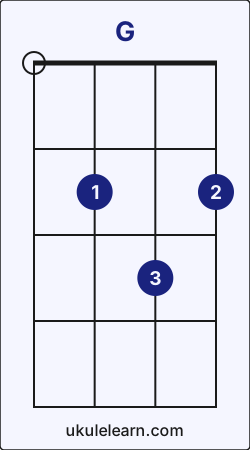 Ukulele G chord diagram
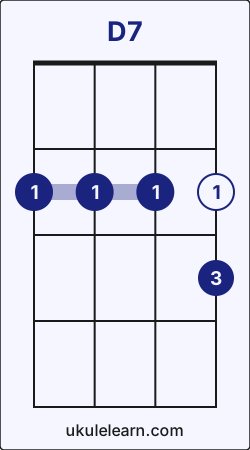 Ukulele D7 chord diagram
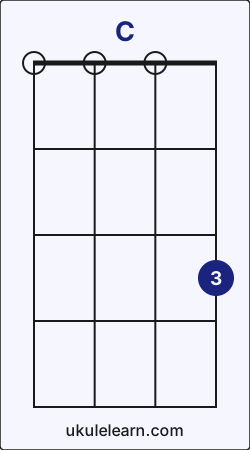 Ukulele C chord diagram
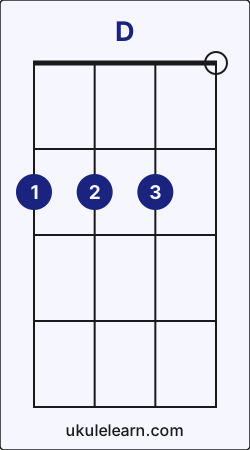 Ukulele D chord diagram
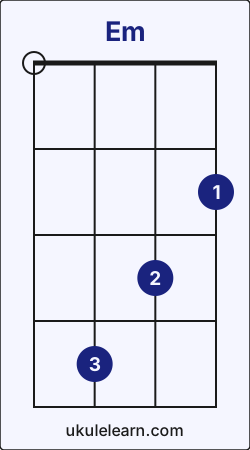 Ukulele Em chord diagram
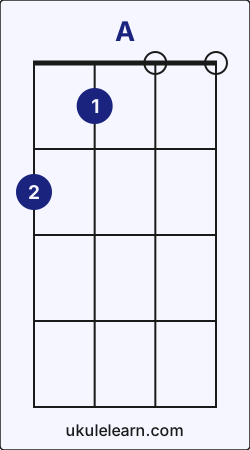 Ukulele A chord diagram
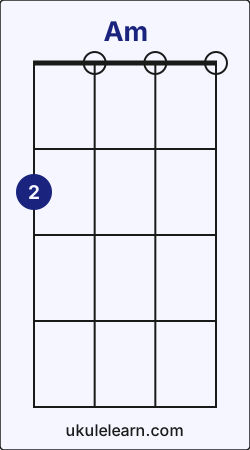 Ukulele Am chord diagram
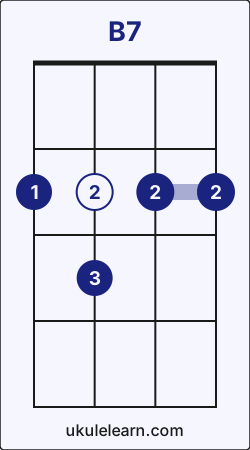 Ukulele B7 chord diagram
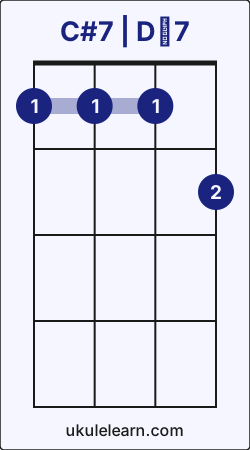 Ukulele C#7 | D♭7 chord diagram
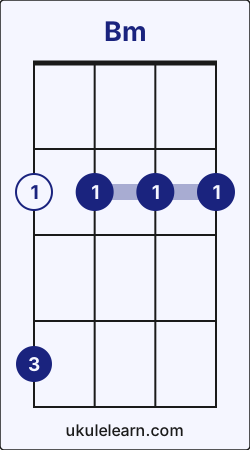 Ukulele Bm chord diagram
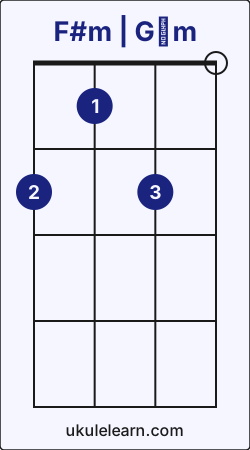 Ukulele F#m | G♭m chord diagram
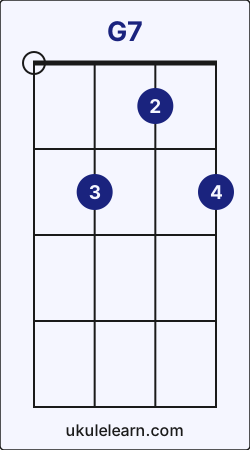 Ukulele G7 chord diagram
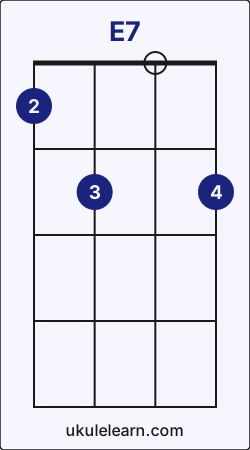 Ukulele E7 chord diagram
[Opening]
[G] [D7] [G] [C] [G] [D7]
[G]Hatches, matches [D7]then dispatches
All [G]in the embers [C]of my ashes
[G]Thy will [D]was done
Oh [G]wipe that worry [D7]from your face
You’ll [G]die when you see [C]my new face but
[Em]Do [A]the [D]time
You’re [Em]in [D]for [G]life
[chorus]
[Am]Oh my [D]friends I hear you sing
[B7]The lord’s my shepherd really [Em]what a song to sing [C#7]
[C#7]Why bring me flowers when you [A]know that I can’t smell a [Em]thing
[A]For the [D]folks I leave behind
[B7]I’m in heaven well i[Em]magine my surprise
[C#7]I’m really flattered that you [A]came here to remember
And [Am]look I made the news a[Em]gain
In Requi[A]em, with [Am]all my [Em]friends
[section 2]
There [G]is no shame here, I [D7]feel no loss
The [G]pawn and king both [C]in the same box
[G]No one [D]fa[Bm]mous
[G]Please don’t panic
It [Am]looks so tragic
All [G]switching seats on [C]the Titanic
I’m [Em]sad [A]to [D]go
Hope you en[Em]joy [D]the [G]show
[section 3]
[A]Oh my [D]friends I hear you say
[B7]A lot of lovely things a[Em]bout me here today
[C#7]I’m glad you didn’t [A]let the truth get in the [Em]way
To [A]all my [D]friends I leave behind
[B7]They put a spread on so let’s all [Em]go back to mine
[C#7]I really love it that you [A]came here to remember
And [Am]look we made the news at [Em]ten
In Requi[F#m]em, with [Am]all my [Em]friends
[section 4]
[D7]This dyin’ [G7]ain’t much of a [C]living, [G]no no
[Em]Will [A]we want what we’re [Em]given, [Am]heaven [D]knows
[chorus]
[B7] [Em] [C#7] [A] [Em]
[A]Oh my [D]friends I hear you sing
[B7]The lord’s my shepherd really [Em]what a song to sing
[C#7]Why bring me flowers when you [A]know that I can’t smell a [Em]thing
[A]For the [D]folks I leave behind
[B7]I’m in heaven well i[Em]magine my surprise
[C#7]I’m really flattered that you [A]came here to remember
And [Am]look I made the news a[Em]gain
In Requi[A]em, with [Am]all my [Em]friends
[A]With [Am]all my [Em]friends
[Closing]
[A]With [Am]all my [Em]friends
[A]With [Am]all my [Em]friends
[outro]
[E7] [A] [Am] [Em]
How to play Requiem on Ukulele (Step-by-step)
Gary Barlow - Requiem on ukulele requires 13 chords and 26 core chord transitions. You can find the full step-by-step guide below. Before you start, tune your instrument. The song uses the ↓-↓↑-↓↑-↓↑ pattern; practice it muted first, or simplify to downstrokes while you learn the changes.
Requiem uses these transitions most often: Em → A (12), Am → Em (10), and A → Am (9). These transitions may feel a little challenging at first, but with steady practice you can play this song quickly.When you are ready, begin with G - D7 chord transition.
1. G → D7 chord transition
To move from G to D7;
- While playing G, lift your middle finger from A string fret 2.
- Lift your index finger from C string fret 2 and place it on G string fret 2.
- Slide your ring finger from E string fret 3 to A string fret 3.
2. G → C chord transition
To move from G to C;
- While playing G, first lift your index finger and middle finger.
- Lift your ring finger from E string fret 3 and place it on A string fret 3.
3. G → D chord transition
To move from G to D;
- Lift your index finger from C string fret 2 and place it on G string fret 2.
- Slide your middle finger from A string fret 2 to C string fret 2.
- Slide your ring finger on E string from fret 3 to fret 2.
4. C → Em chord transition
To move from C to Em;
- Lift your ring finger from A string fret 3 and place it on C string fret 4.
- Place index finger on A string fret 2.
- Place middle finger on E string fret 3.
5. Em → A chord transition
To move from Em to A;
- While playing Em, lift your ring finger from C string fret 4.
- Lift your index finger from A string fret 2 and place it on C string fret 1.
- Slide your middle finger from E string fret 3 to G string fret 2.
6. A → D chord transition
To move from A to D;
- Lift your index finger from C string fret 1 and place it on G string fret 2.
- Slide your middle finger from G string fret 2 to C string fret 2.
- Place ring finger on E string fret 2.
7. D → Em chord transition
To move from D to Em;
- Lift your index finger from G string fret 2 and place it on A string fret 2.
- Slide your middle finger from C string fret 2 to E string fret 3.
- Lift your ring finger from E string fret 2 and place it on C string fret 4.
8. G → Am chord transition
To move from G to Am;
- While playing G, first lift your index finger and ring finger.
- Lift your middle finger from A string fret 2 and place it on G string fret 2.
9. Am → D chord transition
To move from Am to D;
- Lift your middle finger from G string fret 2 and place it on C string fret 2.
- Place index finger on G string fret 2.
- Place ring finger on E string fret 2.
10. D → B7 chord transition
To move from D to B7;
- While playing D, lift your ring finger from E string fret 2.
- Keep index finger on G string fret 2.
- Slide your middle finger on C string from fret 2 to fret 3.
11. B7 → Em chord transition
To move from B7 to Em;
- Lift your index finger from G string fret 2 and place it on A string fret 2.
- Slide your middle finger from C string fret 3 to E string fret 3.
- Place ring finger on C string fret 4.
12. Em → C#7 chord transition
To move from Em to C#7;
- While playing Em, lift your ring finger from C string fret 4.
- Lift your index finger from A string fret 2 and place it on G string fret 1.
- Slide your middle finger from E string fret 3 to A string fret 2.
13. C#7 → A chord transition
To move from C#7 to A;
- Lift your index finger from G string fret 1 and place it on C string fret 1.
- Slide your middle finger from A string fret 2 to G string fret 2.
14. A → Am chord transition
To move from A to Am;
- While playing A, lift your index finger from C string fret 1.
- Keep middle finger on G string fret 2.
15. Am → Em chord transition
To move from Am to Em;
- Lift your middle finger from G string fret 2 and place it on E string fret 3.
- Place index finger on A string fret 2.
- Place ring finger on C string fret 4.
16. Em → G chord transition
To move from Em to G;
- Lift your index finger from A string fret 2 and place it on C string fret 2.
- Slide your middle finger from E string fret 3 to A string fret 2.
- Lift your ring finger from C string fret 4 and place it on E string fret 3.
17. D → Bm chord transition
To move from D to Bm;
- While playing D, lift your middle finger from C string fret 2.
- Lift your index finger from G string fret 2 and place it on C string fret 2.
- Slide your ring finger from E string fret 2 to G string fret 4.
18. Bm → G chord transition
To move from Bm to G;
- Keep index finger on C string fret 2.
- Lift your ring finger from G string fret 4 and place it on E string fret 3.
- Place middle finger on A string fret 2.
19. G → A chord transition
To move from G to A;
- While playing G, lift your ring finger from E string fret 3.
- Slide your index finger on C string from fret 2 to fret 1.
- Slide your middle finger from A string fret 2 to G string fret 2.
20. Em → F#m chord transition
To move from Em to F#m;
- Lift your index finger from A string fret 2 and place it on C string fret 1.
- Slide your middle finger from E string fret 3 to G string fret 2.
- Lift your ring finger from C string fret 4 and place it on E string fret 2.
21. F#m → Am chord transition
To move from F#m to Am;
- While playing F#m, first lift your index finger and ring finger.
- Keep middle finger on G string fret 2.
22. Em → D7 chord transition
To move from Em to D7;
- While playing Em, lift your middle finger from E string fret 3.
- Lift your index finger from A string fret 2 and place it on G string fret 2.
- Slide your ring finger from C string fret 4 to A string fret 3.
23. D7 → G7 chord transition
To move from D7 to G7;
- Lift your index finger from G string fret 2 and place it on E string fret 1.
- Slide your ring finger on A string from fret 3 to fret 2.
- Place middle finger on C string fret 2.
24. G7 → C chord transition
To move from G7 to C;
- While playing G7, first lift your index finger and middle finger.
- Slide your ring finger on A string from fret 2 to fret 3.
25. Em → E7 chord transition
To move from Em to E7;
- Lift your index finger from A string fret 2 and place it on G string fret 1.
- Slide your middle finger from E string fret 3 to C string fret 2.
- Lift your ring finger from C string fret 4 and place it on A string fret 2.
26. E7 → A chord transition
To move from E7 to A;
- While playing E7, lift your ring finger from A string fret 2.
- Lift your index finger from G string fret 1 and place it on C string fret 1.
- Slide your middle finger from C string fret 2 to G string fret 2.
Requiem chord transition analysis
A short, data-driven summary of the chord flow in Requiem.
- Requiem includes 119 chord transitions, 26 of them unique.
- These transitions represent 0.03% of all chord transitions in Ukulelearn.
- Requiem contains 6 of the top 10 transitions across Ukulelearn.
- These transition patterns show how Requiem connects to the rest of Ukulelearn. Mastering them helps you move to similar songs faster.After Em, the most likely next chords across Ukulelearn are C (27%), G (18%), and D (17%).
- Em → G: 18%
- Em → D: 17%
After A, the most likely next chords across Ukulelearn are D (29%), G (13%), and E (12%).- A → D: 29%
- A → Em: 7%