
Keisa Brown - Some Bridges Need Burning Ukulele Chords
Before you play, tune your ukulele and use the tools below to set up your view and flow.
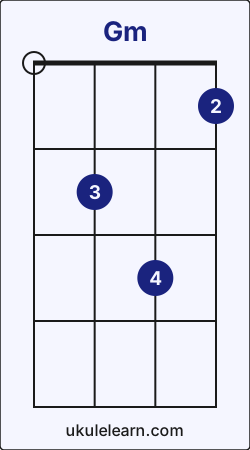 Ukulele Gm chord diagram
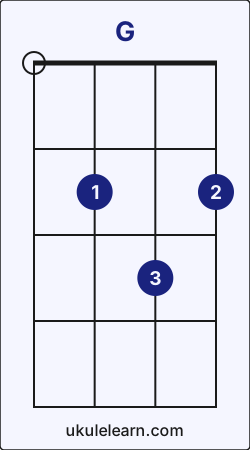 Ukulele G chord diagram
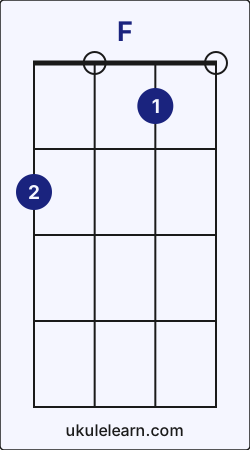 Ukulele F chord diagram
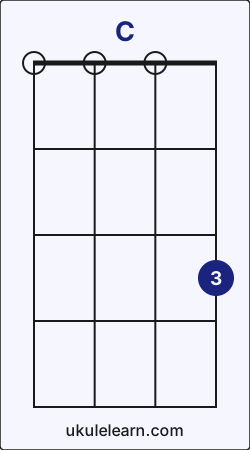 Ukulele C chord diagram
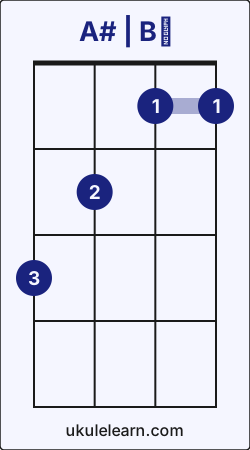 Ukulele A# | B♭ chord diagram
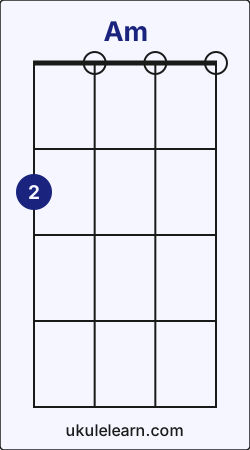 Ukulele Am chord diagram
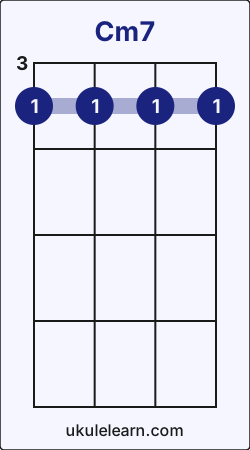 Ukulele Cm7 chord diagram
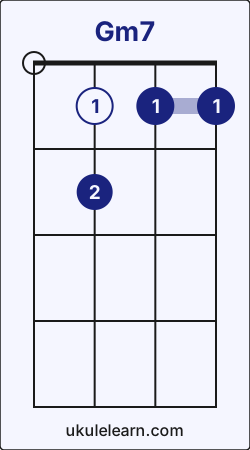 Ukulele Gm7 chord diagram
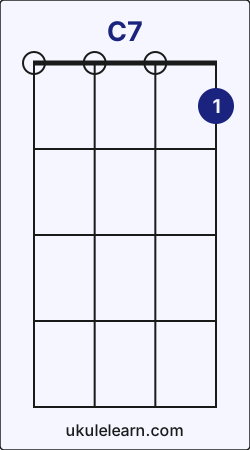 Ukulele C7 chord diagram
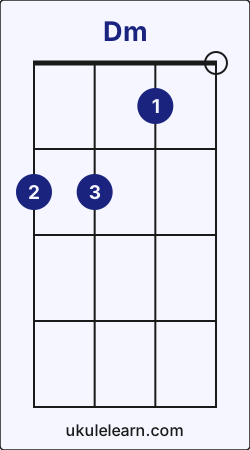 Ukulele Dm chord diagram
 Ukulele C72 chord diagram
[Opening]
[Gm] [G]
[F]I see how this love can do [C]terrible [F]things to you
[Bb]And this one is [Am]slowly tearing me a[Gm]part (oh [Cm7]yes it is baby)
[F]Causing me so much pain [C]out of something I [F]can’t explain
[Bb]How I could love some[Am]one who keeps breaking my [Gm7]heart
[C7]When I know that
[section 2]
[F]Some bridges [Am]need burning doo[Bb]own
Es[F]pecially when they [Am]keep taking me back to [Bb]your side of town
Where I am [Gm7]too weak to fight
Where it [Am]feels so right
When[Dm]ever you [C]hold me [Bb]tight
Some [F]bridges need [Gm7]burning
And I’m [Cm7]burning this [C72]bridge to[F]night (Yes I am)
[section 3]
I know you will always be [C]a love that’s out of [F]reach for me
[Bb]And you are leading me [Am]down a dead end [Gm7]street
(dead end, dead [C7]end, dead [C]end )
I say I am [F]almost tempted tonight [C]oohh to love you [F]one more time
[Bb]When I know that they will [Am]bring me mis[Gm7]ery (oh [C7]baby)
[F]Some bridges [Am]need burning [Bb]down
Es[F]pecially when they [Am]keep taking me back to [Bb]your side of town
[section 4]
Where I am [Gm]too weak to fight
Cuz it [Am]feels so right
When[Dm]ever you’re [C]holding me [Bb]tight
Some [F]bridges need [Gm7]burning
And I’m [C]burning this bridge
Bring it on [F]down, [Dm]bring it on [G]down
Bring it on [Gm]down, bring it on [G]down
[section 5]
[F]Some bridges [Am]need burning [Bb]down (yes they do baby)
Es[F]pecially when they [Am]keep taking me back to [Bb]your side of town
[Closing]
[F]Some bridges [Am]need burning [Bb]down
Es[F]pecially when they [Am]keep taking me back to [Bb]your side of town
How to play Some Bridges Need Burning on Ukulele (Step-by-step)
Keisa Brown - Some Bridges Need Burning on ukulele requires 11 chords and 25 core chord transitions. You can find the full step-by-step guide below. Before you start, tune your instrument. The song uses the ↓↑-↓↑-↓↑-↓↑ pattern; practice it muted first, or simplify to downstrokes while you learn the changes.
Some Bridges Need Burning uses these transitions most often: Am → Bb (8), F → Am (8), and Bb → F (7). These transitions may feel a little challenging at first, but with steady practice you can play this song quickly.When you are ready, begin with Gm - G chord transition.
1. Gm → G chord transition
To move from Gm to G;
- Lift your index finger from A string fret 1 and place it on C string fret 2.
- Slide your middle finger from C string fret 2 to A string fret 2.
- Keep ring finger on E string fret 3.
2. G → F chord transition
To move from G to F;
- While playing G, lift your ring finger from E string fret 3.
- Lift your index finger from C string fret 2 and place it on E string fret 1.
- Slide your middle finger from A string fret 2 to G string fret 2.
3. F → C chord transition
To move from F to C;
- While playing F, first lift your index finger and middle finger.
- Place ring finger on A string fret 3.
4. F → Bb chord transition
To move from F to Bb;
- Keep index finger on E string fret 1.
- Lift your middle finger from G string fret 2 and place it on C string fret 2.
- Place ring finger on G string fret 3.
5. Bb → Am chord transition
To move from Bb to Am;
- While playing Bb, first lift your index finger and ring finger.
- Lift your middle finger from C string fret 2 and place it on G string fret 2.
6. Am → Gm chord transition
To move from Am to Gm;
- Lift your middle finger from G string fret 2 and place it on C string fret 2.
- Place index finger on A string fret 1.
- Place ring finger on E string fret 3.
7. Gm → Cm7 chord transition
To move from Gm to Cm7;
- While playing Gm, first lift your middle finger and ring finger.
- Lift your index finger from A string fret 1 and place it on G string fret 3.
8. Cm7 → F chord transition
To move from Cm7 to F;
- Lift your index finger from G string fret 3 and place it on E string fret 1.
- Place middle finger on G string fret 2.
9. Am → Gm7 chord transition
To move from Am to Gm7;
- Lift your middle finger from G string fret 2 and place it on C string fret 2.
- Place index finger on E string fret 1.
10. Gm7 → C7 chord transition
To move from Gm7 to C7;
- While playing Gm7, lift your middle finger from C string fret 2.
- Lift your index finger from E string fret 1 and place it on A string fret 1.
11. C7 → F chord transition
To move from C7 to F;
- Lift your index finger from A string fret 1 and place it on E string fret 1.
- Place middle finger on G string fret 2.
12. F → Am chord transition
To move from F to Am;
- While playing F, lift your index finger from E string fret 1.
- Keep middle finger on G string fret 2.
13. Bb → Gm7 chord transition
To move from Bb to Gm7;
- While playing Bb, lift your ring finger from G string fret 3.
- Keep index finger on E string fret 1.
- Keep middle finger on C string fret 2.
14. Am → Dm chord transition
To move from Am to Dm;
- Keep middle finger on G string fret 2.
- Place index finger on E string fret 1.
- Place ring finger on C string fret 2.
15. Dm → C chord transition
To move from Dm to C;
- While playing Dm, first lift your index finger and middle finger.
- Lift your ring finger from C string fret 2 and place it on A string fret 3.
16. C → Bb chord transition
To move from C to Bb;
- Lift your ring finger from A string fret 3 and place it on G string fret 3.
- Place index finger on E string fret 1.
- Place middle finger on C string fret 2.
17. F → Gm7 chord transition
To move from F to Gm7;
- Keep index finger on E string fret 1.
- Lift your middle finger from G string fret 2 and place it on C string fret 2.
18. Gm7 → Cm7 chord transition
To move from Gm7 to Cm7;
- While playing Gm7, lift your middle finger from C string fret 2.
- Lift your index finger from E string fret 1 and place it on G string fret 3.
19. Cm7 → C72 chord transition
To move from Cm7 to C72;
- While playing Cm7, lift your index finger from G string fret 3.
20. C72 → F chord transition
To move from C72 to F;
- Place index finger on E string fret 1.
- Place middle finger on G string fret 2.
21. C7 → C chord transition
To move from C7 to C;
- While playing C7, lift your index finger from A string fret 1.
- Place ring finger on A string fret 3.
22. Bb → Gm chord transition
To move from Bb to Gm;
- Lift your index finger from E string fret 1 and place it on A string fret 1.
- Keep middle finger on C string fret 2.
- Slide your ring finger from G string fret 3 to E string fret 3.
23. Gm7 → C chord transition
To move from Gm7 to C;
- While playing Gm7, first lift your index finger and middle finger.
- Place ring finger on A string fret 3.
24. F → Dm chord transition
To move from F to Dm;
- Keep index finger on E string fret 1.
- Keep middle finger on G string fret 2.
- Place ring finger on C string fret 2.
25. Dm → G chord transition
To move from Dm to G;
- Lift your index finger from E string fret 1 and place it on C string fret 2.
- Slide your middle finger from G string fret 2 to A string fret 2.
- Lift your ring finger from C string fret 2 and place it on E string fret 3.
Some Bridges Need Burning chord transition analysis
A short, data-driven summary of the chord flow in Some Bridges Need Burning.
- Some Bridges Need Burning includes 76 chord transitions, 25 of them unique.
- These transitions represent 0.02% of all chord transitions in Ukulelearn.
- Some Bridges Need Burning contains 3 of the top 10 transitions across Ukulelearn.
- These transition patterns show how Some Bridges Need Burning connects to the rest of Ukulelearn. Mastering them helps you move to similar songs faster.After F, the most likely next chords across Ukulelearn are C (40%), G (21%), and Am (11%).
- F → C: 40%
- F → Am: 11%
After Bb, the most likely next chords across Ukulelearn are F (34%), C (20%), and Dm (9%).- Bb → F: 34%
- Bb → Gm: 6%