
Jaymes Young - Tied Down Ukulele Chords
Before you play, tune your ukulele and use the tools below to set up your view and flow.
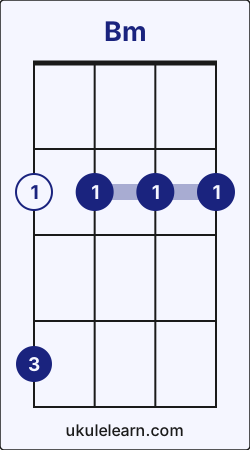 Ukulele Bm chord diagram
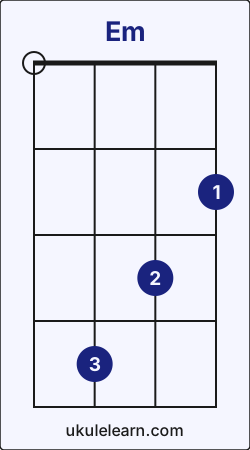 Ukulele Em chord diagram
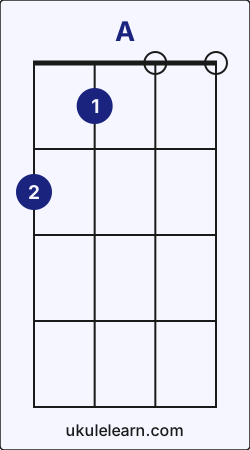 Ukulele A chord diagram
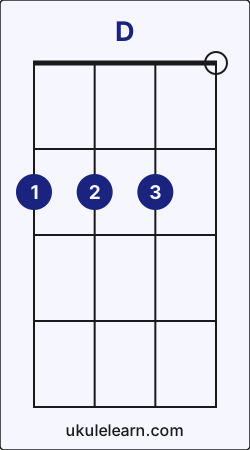 Ukulele D chord diagram
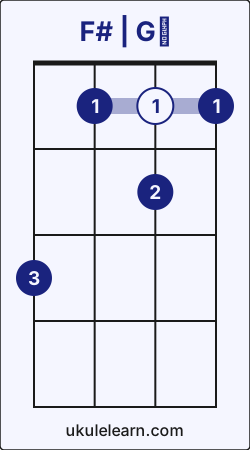 Ukulele F# | G♭ chord diagram
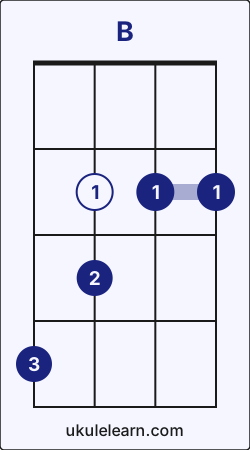 Ukulele B chord diagram
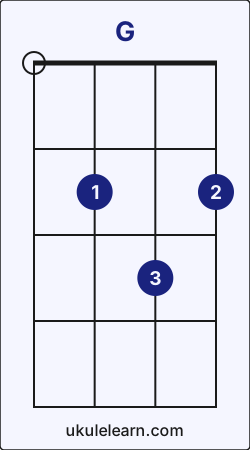 Ukulele G chord diagram
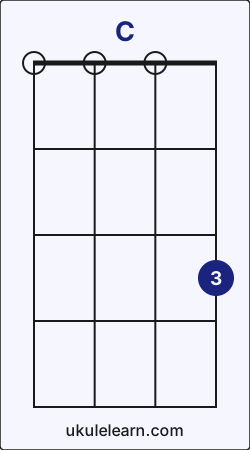 Ukulele C chord diagram
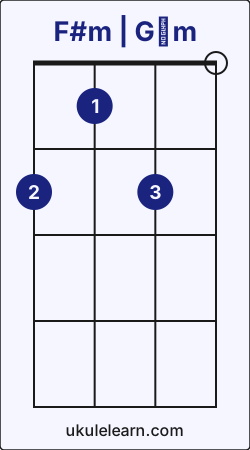 Ukulele F#m | G♭m chord diagram
[Opening]
[Bm]These days the lovers trade their [Em]places
[A]Dancing all around each other’s [D]chairs [F#]
[B]I can see the numbness on their [Em]faces
[A]Jealousy fills up their hearts in [D]pairs [F#]
[G]So please could I be [D]selfish with your [Em]body?[G]
[G]’Cause I don’t think I could [D]share you [Em]with nobody [G]
[chorus]
[A]Oh when I [G]have [D]you, I’m gonna [C]brand you with my lips
[G]And all of the [D]world will know that you’re [G]mine now
We’ll never [Bm]lose [A]faith, ’cause [G]we’ll never [Em]forget this taste
[Bm]My love [A]has the [F#m]power to [G]keep the tide down
[chorus]
[A]Ohh, [Bm]I’ll get you [Em]tied down, tied down
[Bm]Ohh I’ll get you [Em]tied down, tied down
[section 2]
[Bm]Ohh, late at night you’ll hear the screaming [Em]echo
But we [A]all pretend we never heard the [D]cries in the [F#]daytime
[Bm]Don’t you worry my touch won’t leave you [Em]hollow
I’m [A]never going to let you change your [D]mind [F#]
[chorus]
[A]Oh when I [G]have [D]you, I’m gonna [C]brand you with my lips
[G]And all of the [D]world will know that you’re [G]mine now
We’ll never [Bm]lose [A]faith, ’cause [G]we’ll never [Em]forget this taste
[Bm]My love [A]has the [F#m]power to [G]keep the tide down
[chorus]
[A]Ohh, [Bm]I’ll get you [Em]tied down, tied down
[Bm]Ohh I’ll get you [Em]tied down, tied down
[A]Ohh, [Bm]I’ll get you [Em]tied down, tied down
[Bm]Ohh I’ll get you [Em]tied down, tied down
[section 3]
[G]Don’t be afraid to leave your [Em]mark
Give me the scars to [D]remind me
Just how good you [A]are (how good you are)
[G]And if your faith turns into to [Em]dark
Pull me closer and [D]know
That it’s enough to keep you [A]tied down
[chorus]
[A]Ohh, [Bm]I’ll get you [Em]tied down, tied down
[Bm]Ohh I’ll get you [Em]tied down, tied down
[A]Ohh, [Bm]I’ll get you [Em]tied down, tied down
[Bm]Ohh I’ll get you [Em]tied down, tied down
[Closing]
[Bm]Tied [Em]down, ohh
How to play Tied Down on Ukulele (Step-by-step)
Jaymes Young - Tied Down on ukulele requires 9 chords and 19 core chord transitions. You can find the full step-by-step guide below. Before you start, tune your instrument. The song uses the ↓-↓↑-↑↓↑ pattern; practice it muted first, or simplify to downstrokes while you learn the changes.
Tied Down uses these transitions most often: Bm → Em (14), Em → Bm (9), and Em → A (6). These transitions may feel a little challenging at first, but with steady practice you can play this song quickly.When you are ready, begin with Bm - Em chord transition.
1. Bm → Em chord transition
To move from Bm to Em;
- Lift your index finger from C string fret 2 and place it on A string fret 2.
- Slide your ring finger from G string fret 4 to C string fret 4.
- Place middle finger on E string fret 3.
2. Em → A chord transition
To move from Em to A;
- While playing Em, lift your ring finger from C string fret 4.
- Lift your index finger from A string fret 2 and place it on C string fret 1.
- Slide your middle finger from E string fret 3 to G string fret 2.
3. A → D chord transition
To move from A to D;
- Lift your index finger from C string fret 1 and place it on G string fret 2.
- Slide your middle finger from G string fret 2 to C string fret 2.
- Place ring finger on E string fret 2.
4. D → F# chord transition
To move from D to F#;
- Lift your index finger from G string fret 2 and place it on C string fret 1.
- Slide your middle finger from C string fret 2 to E string fret 2.
- Lift your ring finger from E string fret 2 and place it on G string fret 3.
5. F# → B chord transition
To move from F# to B;
- Lift your index finger from C string fret 1 and place it on E string fret 2.
- Slide your middle finger from E string fret 2 to C string fret 3.
- Slide your ring finger on G string from fret 3 to fret 4.
6. B → Em chord transition
To move from B to Em;
- Lift your index finger from E string fret 2 and place it on A string fret 2.
- Slide your middle finger from C string fret 3 to E string fret 3.
- Lift your ring finger from G string fret 4 and place it on C string fret 4.
7. F# → G chord transition
To move from F# to G;
- Slide your index finger on C string from fret 1 to fret 2.
- Slide your middle finger from E string fret 2 to A string fret 2.
- Lift your ring finger from G string fret 3 and place it on E string fret 3.
8. G → D chord transition
To move from G to D;
- Lift your index finger from C string fret 2 and place it on G string fret 2.
- Slide your middle finger from A string fret 2 to C string fret 2.
- Slide your ring finger on E string from fret 3 to fret 2.
9. D → Em chord transition
To move from D to Em;
- Lift your index finger from G string fret 2 and place it on A string fret 2.
- Slide your middle finger from C string fret 2 to E string fret 3.
- Lift your ring finger from E string fret 2 and place it on C string fret 4.
10. Em → G chord transition
To move from Em to G;
- Lift your index finger from A string fret 2 and place it on C string fret 2.
- Slide your middle finger from E string fret 3 to A string fret 2.
- Lift your ring finger from C string fret 4 and place it on E string fret 3.
11. G → A chord transition
To move from G to A;
- While playing G, lift your ring finger from E string fret 3.
- Slide your index finger on C string from fret 2 to fret 1.
- Slide your middle finger from A string fret 2 to G string fret 2.
12. D → C chord transition
To move from D to C;
- While playing D, first lift your index finger and middle finger.
- Lift your ring finger from E string fret 2 and place it on A string fret 3.
13. C → G chord transition
To move from C to G;
- Lift your ring finger from A string fret 3 and place it on E string fret 3.
- Place index finger on C string fret 2.
- Place middle finger on A string fret 2.
14. G → Bm chord transition
To move from G to Bm;
- While playing G, lift your middle finger from A string fret 2.
- Keep index finger on C string fret 2.
- Lift your ring finger from E string fret 3 and place it on G string fret 4.
15. Bm → A chord transition
To move from Bm to A;
- While playing Bm, lift your ring finger from G string fret 4.
- Slide your index finger on C string from fret 2 to fret 1.
- Place middle finger on G string fret 2.
16. A → F#m chord transition
To move from A to F#m;
- Keep index finger on C string fret 1.
- Keep middle finger on G string fret 2.
- Place ring finger on E string fret 2.
17. F#m → G chord transition
To move from F#m to G;
- Slide your index finger on C string from fret 1 to fret 2.
- Slide your middle finger from G string fret 2 to A string fret 2.
- Slide your ring finger on E string from fret 2 to fret 3.
18. F# → Bm chord transition
To move from F# to Bm;
- While playing F#, lift your middle finger from E string fret 2.
- Slide your index finger on C string from fret 1 to fret 2.
- Slide your ring finger on G string from fret 3 to fret 4.
19. F# → A chord transition
To move from F# to A;
- While playing F#, lift your ring finger from G string fret 3.
- Keep index finger on C string fret 1.
- Lift your middle finger from E string fret 2 and place it on G string fret 2.
Tied Down chord transition analysis
A short, data-driven summary of the chord flow in Tied Down.
- Tied Down includes 90 chord transitions, 19 of them unique.
- These transitions represent 0.02% of all chord transitions in Ukulelearn.
- Tied Down contains 5 of the top 10 transitions across Ukulelearn.
- These transition patterns show how Tied Down connects to the rest of Ukulelearn. Mastering them helps you move to similar songs faster.After Em, the most likely next chords across Ukulelearn are C (27%), G (18%), and D (17%).
- Em → G: 18%
- Em → D: 17%
After Bm, the most likely next chords across Ukulelearn are G (25%), A (19%), and Em (13%).- Bm → A: 19%
- Bm → Em: 13%