
Nat King Cole - Walkin’ My Baby Back Home Ukulele Chords
Before you play, tune your ukulele and use the tools below to set up your view and flow.
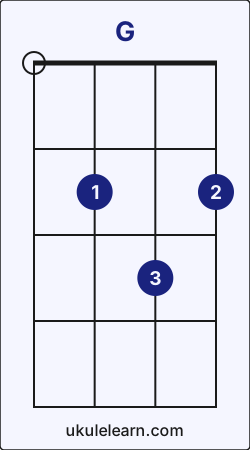 Ukulele G chord diagram
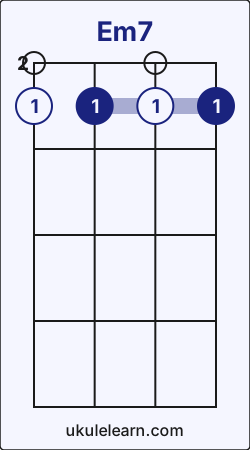 Ukulele Em7 chord diagram
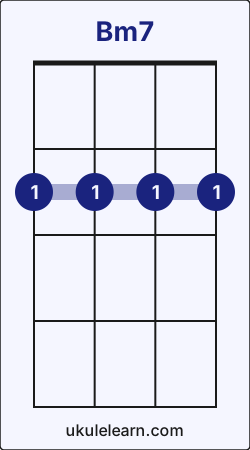 Ukulele Bm7 chord diagram
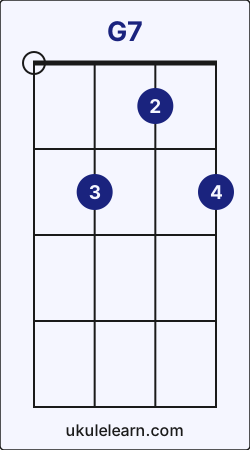 Ukulele G7 chord diagram
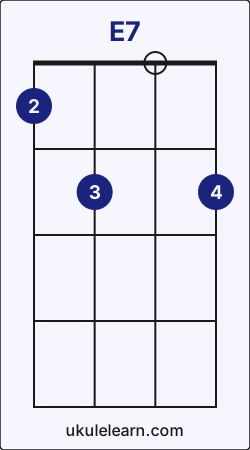 Ukulele E7 chord diagram
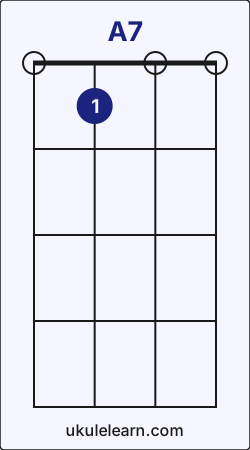 Ukulele A7 chord diagram
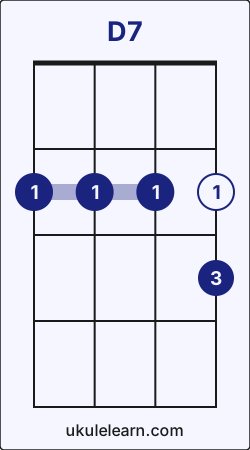 Ukulele D7 chord diagram
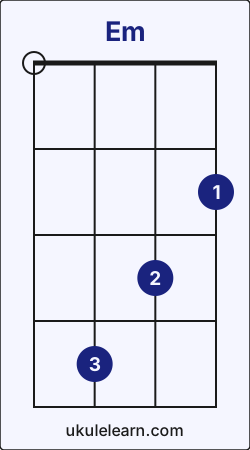 Ukulele Em chord diagram
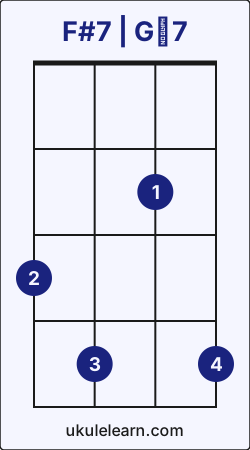 Ukulele F#7 | G♭7 chord diagram
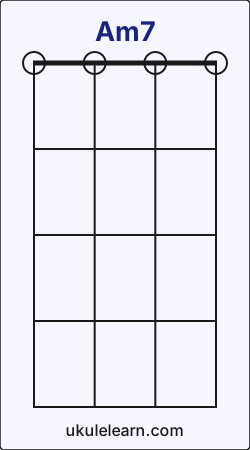 Ukulele Am7 chord diagram
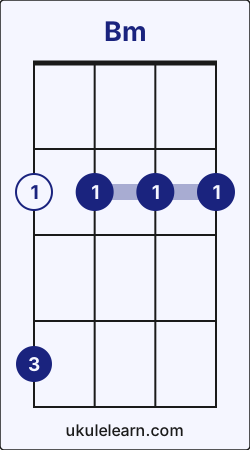 Ukulele Bm chord diagram
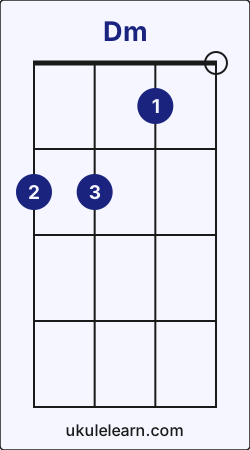 Ukulele Dm chord diagram
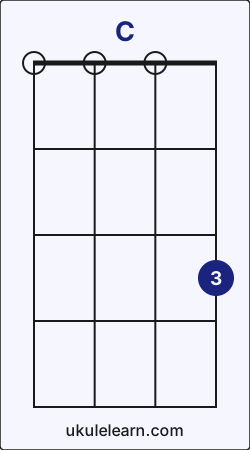 Ukulele C chord diagram
[Opening]
[G]Gee but it’s [Em7]great after [Bm7]being out [Em7]late
[G7]Walkin’ my baby back [E7]home
[A7]Arm in [D7]arm over [A7]meadow and [D7]farm
[A7]Walkin’ my [D7]baby back [G]home [G7]
[section 2]
[G]We walk a[Em7]long harmo[Bm7]nizing a [Em7]song
[G7]Or I’m reciting a [E7]poem
[A7]Owls go [D7]by and they [A7]give me the [D7]eye
[A7]Walkin’ my [D7]baby back[G]home [G7]
[section 3]
We [Bm7]stop for a while, she [E7]gives me a smile
She [Em]snuggles her head to my [F#7]chest
We [Bm7]start in to pet and [E7]that’s when I get
[Am7]Her talcum all [D7]over my vest
[section 4]
[G]Then after I [Em7]kinda [Bm7]straighten my [Em7]tie
[G7]She has to borrow my [Em7]comb
[A7]One kiss [D7]then we con[A7]tinue a[D7]gain
[A7]Walkin’ my [D7]baby back [D7]home [G7]
[section 5]
She’s [Bm]afraid of the dark so [E7]I have to park
Out[Em]side of her door till it’s [F#7]light
She [Bm]says if I try to [E7]kiss her she’ll cry
[A7]I dry her tears [D7]all through the night
[section 6]
[G]Hand in [Em7]hand to a [Bm7]barbecue [Em]stand
[G7]Right from her doorway we [E7]roam
[A7]Eats and [D7]then it’s [A7]pleasure a[D7]gain
[A7]Walking my [D7]baby, [Dm]talking my [E7]baby
[Closing]
[A7]Loving my [D7]baby, [Dm]I don’t mean [E7]maybe
[A7]Walking my [D7]baby [C]back [G]home
How to play Walkin' My Baby Back Home on Ukulele (Step-by-step)
Nat King Cole - Walkin' My Baby Back Home on ukulele requires 13 chords and 26 core chord transitions. You can find the full step-by-step guide below. Before you start, tune your instrument. The song uses the ↓↑-↓↑-↓↑-↓↑ pattern; practice it muted first, or simplify to downstrokes while you learn the changes.
Walkin' My Baby Back Home uses these transitions most often: A7 → D7 (15), D7 → A7 (8), and E7 → A7 (6). These transitions may feel a little challenging at first, but with steady practice you can play this song quickly.When you are ready, begin with G - Em7 chord transition.
1. G → Em7 chord transition
To move from G to Em7;
- While playing G, lift your ring finger from E string fret 3.
- Keep index finger on C string fret 2.
- Keep middle finger on A string fret 2.
2. Em7 → Bm7 chord transition
To move from Em7 to Bm7;
- While playing Em7, lift your middle finger from A string fret 2.
- Lift your index finger from C string fret 2 and place it on G string fret 2.
3. Em7 → G7 chord transition
To move from Em7 to G7;
- Lift your index finger from C string fret 2 and place it on E string fret 1.
- Slide your middle finger from A string fret 2 to C string fret 2.
- Place ring finger on A string fret 2.
4. G7 → E7 chord transition
To move from G7 to E7;
- Lift your index finger from E string fret 1 and place it on G string fret 1.
- Keep middle finger on C string fret 2.
- Keep ring finger on A string fret 2.
5. E7 → A7 chord transition
To move from E7 to A7;
- While playing E7, first lift your middle finger and ring finger.
- Lift your index finger from G string fret 1 and place it on C string fret 1.
6. A7 → D7 chord transition
To move from A7 to D7;
- Lift your index finger from C string fret 1 and place it on G string fret 2.
- Place ring finger on A string fret 3.
7. D7 → G chord transition
To move from D7 to G;
- Lift your index finger from G string fret 2 and place it on C string fret 2.
- Slide your ring finger from A string fret 3 to E string fret 3.
- Place middle finger on A string fret 2.
8. G → G7 chord transition
To move from G to G7;
- Lift your index finger from C string fret 2 and place it on E string fret 1.
- Slide your middle finger from A string fret 2 to C string fret 2.
- Lift your ring finger from E string fret 3 and place it on A string fret 2.
9. G7 → Bm7 chord transition
To move from G7 to Bm7;
- While playing G7, first lift your middle finger and ring finger.
- Lift your index finger from E string fret 1 and place it on G string fret 2.
10. Bm7 → E7 chord transition
To move from Bm7 to E7;
- Slide your index finger on G string from fret 2 to fret 1.
- Place middle finger on C string fret 2.
- Place ring finger on A string fret 2.
11. E7 → Em chord transition
To move from E7 to Em;
- Lift your index finger from G string fret 1 and place it on A string fret 2.
- Slide your middle finger from C string fret 2 to E string fret 3.
- Lift your ring finger from A string fret 2 and place it on C string fret 4.
12. Em → F#7 chord transition
To move from Em to F#7;
- Lift your index finger from A string fret 2 and place it on E string fret 2.
- Slide your middle finger from E string fret 3 to G string fret 3.
- Keep ring finger on C string fret 4.
- Place pinky on A string fret 4.
13. F#7 → Bm7 chord transition
To move from F#7 to Bm7;
- While playing F#7, first lift your middle finger, ring finger, and pinky.
- Lift your index finger from E string fret 2 and place it on G string fret 2.
14. E7 → Am7 chord transition
To move from E7 to Am7;
- While playing E7, first lift your index finger, middle finger, and ring finger.
15. Am7 → D7 chord transition
To move from Am7 to D7;
- Place index finger on G string fret 2.
- Place ring finger on A string fret 3.
16. Em7 → A7 chord transition
To move from Em7 to A7;
- While playing Em7, lift your middle finger from A string fret 2.
- Slide your index finger on C string from fret 2 to fret 1.
17. D7 → G7 chord transition
To move from D7 to G7;
- Lift your index finger from G string fret 2 and place it on E string fret 1.
- Slide your ring finger on A string from fret 3 to fret 2.
- Place middle finger on C string fret 2.
18. G7 → Bm chord transition
To move from G7 to Bm;
- While playing G7, lift your middle finger from C string fret 2.
- Lift your index finger from E string fret 1 and place it on C string fret 2.
- Slide your ring finger from A string fret 2 to G string fret 4.
19. Bm → E7 chord transition
To move from Bm to E7;
- Lift your index finger from C string fret 2 and place it on G string fret 1.
- Slide your ring finger from G string fret 4 to A string fret 2.
- Place middle finger on C string fret 2.
20. F#7 → Bm chord transition
To move from F#7 to Bm;
- While playing F#7, first lift your middle finger and pinky.
- Lift your index finger from E string fret 2 and place it on C string fret 2.
- Slide your ring finger from C string fret 4 to G string fret 4.
21. Bm7 → Em chord transition
To move from Bm7 to Em;
- Lift your index finger from G string fret 2 and place it on A string fret 2.
- Place middle finger on E string fret 3.
- Place ring finger on C string fret 4.
22. Em → G7 chord transition
To move from Em to G7;
- Lift your index finger from A string fret 2 and place it on E string fret 1.
- Slide your middle finger from E string fret 3 to C string fret 2.
- Lift your ring finger from C string fret 4 and place it on A string fret 2.
23. D7 → Dm chord transition
To move from D7 to Dm;
- Lift your index finger from G string fret 2 and place it on E string fret 1.
- Slide your ring finger from A string fret 3 to C string fret 2.
- Place middle finger on G string fret 2.
24. Dm → E7 chord transition
To move from Dm to E7;
- Lift your index finger from E string fret 1 and place it on G string fret 1.
- Slide your middle finger from G string fret 2 to C string fret 2.
- Lift your ring finger from C string fret 2 and place it on A string fret 2.
25. D7 → C chord transition
To move from D7 to C;
- While playing D7, lift your index finger from G string fret 2.
- Keep ring finger on A string fret 3.
26. C → G chord transition
To move from C to G;
- Lift your ring finger from A string fret 3 and place it on E string fret 3.
- Place index finger on C string fret 2.
- Place middle finger on A string fret 2.
Walkin' My Baby Back Home chord transition analysis
A short, data-driven summary of the chord flow in Walkin' My Baby Back Home.
- Walkin' My Baby Back Home includes 78 chord transitions, 26 of them unique.
- These transitions represent 0.02% of all chord transitions in Ukulelearn.
- Walkin' My Baby Back Home contains 1 of the top 10 transitions across Ukulelearn.
- These transition patterns show how Walkin' My Baby Back Home connects to the rest of Ukulelearn. Mastering them helps you move to similar songs faster.After D7, the most likely next chords across Ukulelearn are G (51%), G7 (18%), and C (6%).
- D7 → G: 51%
- D7 → G7: 18%
After A7, the most likely next chords across Ukulelearn are D (42%), D7 (18%), and Dm (12%).- A7 → D7: 18%