
Connie Francis - Who’s Sorry Now Ukulele Chords
Before you play, tune your ukulele and use the tools below to set up your view and flow.
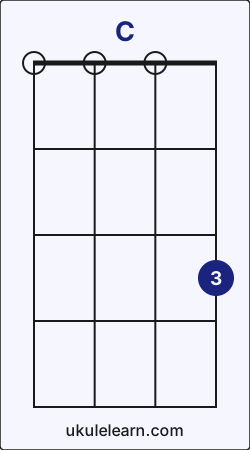 Ukulele C chord diagram
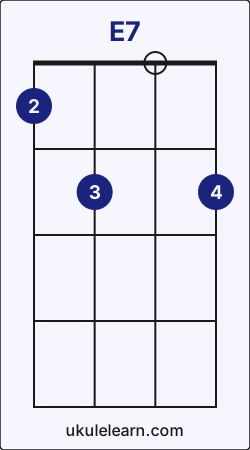 Ukulele E7 chord diagram
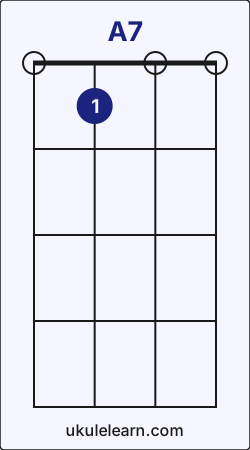 Ukulele A7 chord diagram
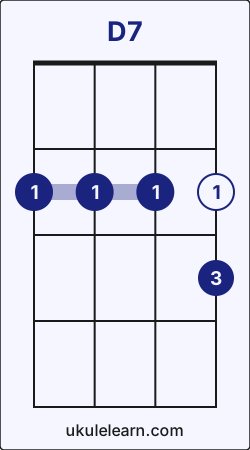 Ukulele D7 chord diagram
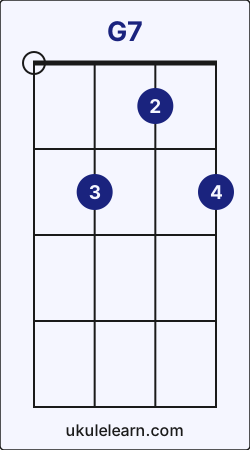 Ukulele G7 chord diagram
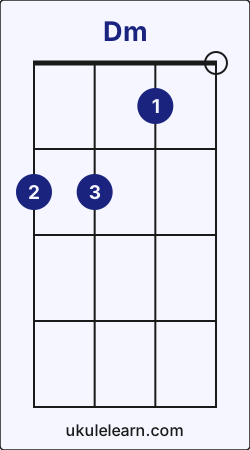 Ukulele Dm chord diagram
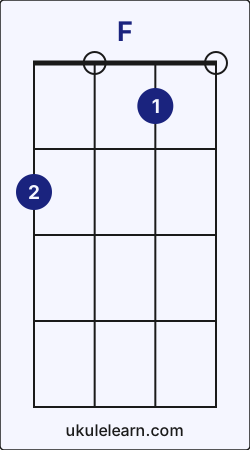 Ukulele F chord diagram
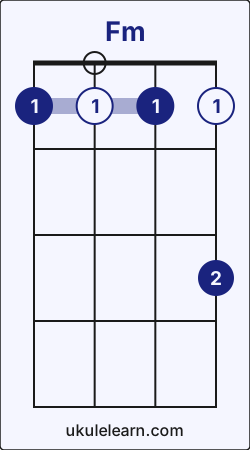 Ukulele Fm chord diagram
[Opening]
[C]Who’s sorry now? [E7]Who’s sorry now?
[A7]Whose heart is aching for [D7]breaking each vow?
[G7]Who’s sad and blue? [C]Who’s crying [A7]too?
[D7]Just like I cried over [G7]you [G7]
[Closing]
[C]Right to the end, [E7]Just like a friend
[A7]I tried to warn you some[Dm]how
[F]You had your [Fm]way, [C]Now you must [A7]pay
[D7]I’m glad that [G7]you’re sorry [C]now
How to play Who's Sorry Now on Ukulele (Step-by-step)
Connie Francis - Who's Sorry Now on ukulele requires 8 chords and 10 core chord transitions. You can find the full step-by-step guide below. Before you start, tune your instrument. The song uses the ↓-↓↑-↑↓↑ pattern; practice it muted first, or simplify to downstrokes while you learn the changes.
Who's Sorry Now uses these transitions most often: A7 → D7 (3), D7 → G7 (3), and G7 → C (3). These transitions may feel a little challenging at first, but with steady practice you can play this song quickly.When you are ready, begin with C - E7 chord transition.
1. C → E7 chord transition
To move from C to E7;
- Slide your ring finger on A string from fret 3 to fret 2.
- Place index finger on G string fret 1.
- Place middle finger on C string fret 2.
2. E7 → A7 chord transition
To move from E7 to A7;
- While playing E7, first lift your middle finger and ring finger.
- Lift your index finger from G string fret 1 and place it on C string fret 1.
3. A7 → D7 chord transition
To move from A7 to D7;
- Lift your index finger from C string fret 1 and place it on G string fret 2.
- Place ring finger on A string fret 3.
4. D7 → G7 chord transition
To move from D7 to G7;
- Lift your index finger from G string fret 2 and place it on E string fret 1.
- Slide your ring finger on A string from fret 3 to fret 2.
- Place middle finger on C string fret 2.
5. G7 → C chord transition
To move from G7 to C;
- While playing G7, first lift your index finger and middle finger.
- Slide your ring finger on A string from fret 2 to fret 3.
6. C → A7 chord transition
To move from C to A7;
- While playing C, lift your ring finger from A string fret 3.
- Place index finger on C string fret 1.
7. A7 → Dm chord transition
To move from A7 to Dm;
- Lift your index finger from C string fret 1 and place it on E string fret 1.
- Place middle finger on G string fret 2.
- Place ring finger on C string fret 2.
8. Dm → F chord transition
To move from Dm to F;
- While playing Dm, lift your ring finger from C string fret 2.
- Keep index finger on E string fret 1.
- Keep middle finger on G string fret 2.
9. F → Fm chord transition
To move from F to Fm;
- Lift your index finger from E string fret 1 and place it on G string fret 1.
- Slide your middle finger from G string fret 2 to E string fret 1.
- Place pinky on A string fret 3.
10. Fm → C chord transition
To move from Fm to C;
- While playing Fm, first lift your index finger, middle finger, and pinky.
- Place ring finger on A string fret 3.
Who's Sorry Now chord transition analysis
A short, data-driven summary of the chord flow in Who's Sorry Now.
- Who's Sorry Now includes 19 chord transitions, 10 of them unique.
- These transitions represent 0.01% of all chord transitions in Ukulelearn.
- Who's Sorry Now contains 2 of the top 25 transitions across Ukulelearn.
- These transition patterns show how Who's Sorry Now connects to the rest of Ukulelearn. Mastering them helps you move to similar songs faster.After C, the most likely next chords across Ukulelearn are G (35%), F (16%), and D (11%).
- C → E7: 1%
- C → A7: 1%
After A7, the most likely next chords across Ukulelearn are D (42%), D7 (18%), and Dm (12%).- A7 → D7: 18%
- A7 → Dm: 12%